This blog explores US influence (financial + cultural), Anglocentric (ie, primarily English) representations, digitisation, ownership, industry developments, audience, media theories, tracking key news + events, with Film/Media A-Level/undergrad students + educators in mind. Examples often include Sheffield's Warp (Indie) and London/LA-based Working Title (NBC-Universal subsidiary), ie This is England/Four Lions v Bridget Jones/Green Zone! Please acknowledge the source/blog author: Mr D Burrowes
‘In 1985, Lee wrote the screenplay for She's Gotta Have It, about Nola Darling
and her three suitors. Shot on the streets of Brooklyn
and featuring a star turn by Lee as Mars Blackmon, a bespectacled and geeky
would-be lover, the movie not only defied prevailing stereotypes of the
Reagan-era inner-city black movie, but called to mind Woody Allen's early
romantic comedies. To help finance the movie - which cost $175,000 - he
obtained a grant from the New York State Council on the Arts, and seed money
from his maternal grandmother, Zimmie, a frugal woman who "saved her
social security cheques", Lee says.’
‘She's Gotta Have It premiered at the San Francisco Film
Festival and prompted a bidding war for the distribution rights. It opened in
the summer of 1986, with what Lee calls a "marketing gimmick": for
nearly a month, the movie could be seen at only one cinema in America, Cinema Studio in New York. "Every night it was sold
out," Lee recalled. "And I would get there and hand out buttons. Me
and my friends were selling She's Gotta Have It T-shirts." When the film
opened in wide release, it made about $7m. The credits announced the film as
"A Spike Lee Joint". Lee said: "Coming from the independent
world, I knew that millions and millions of dollars were not going to be spent
on the promotion and marketing of my film. So in a lot of ways I had to market
myself and market the brand of Spike Lee."’
Today we'll be building on our initial learning around WT's early history and subsequent development into the leading UK film producer.
Back when they started out it was all so very different...
We'll look at their 1st 2 films as WT: MBL (Stephen Frears, 1985) [IMDB] and WYWH (David Leland, 1987) [IMDB]
Chances are you've heard of neither before now, but one of them created a memorable (and slightly rude!) catchphrase: 'up yer bum'...
MBL cost just £650k, WYWH slightly more at £1m; both were acclaimed by film critics and both today are seen as classics. Lets tease out what makes these 2 early WT films so different from almost all the subsequent releases (4Weds, NotHill, BJD etc).
Here's the trailer for MBL:
We'll look at marketing in some detail, but what expectations does this trailer create for YOU? (remember, part of this topic is the ability to think of how YOU operate as a film consumer)
Does it strike you as typically British - if so, why ... and if not, why?!
A key point to grasp for this exam is that you'll need very specific examples of actual films to write about - particular scenes/shots/elements. So, your note-taking needs to be very detailed and precise, ie your denotation of these scenes picked out as useful. These are effectively the same as quotes for an English Lit exam!
Lets now look at the film's opening - the DVD is available for you to borrow from the library (ditto WYWH and many more WT/Warp films, + some Ealing, Hammer...); I've found the opening on YouTube too:
As You watch this, consider again:
(i) what signifiers there are of Britishness, and what general representations there are
(ii) the general style or genre of cinematography, mise-en-scene etc
(iii) the readings available - do you think as a teen in 2012 you can follow the director/cast/editor's preferred reading?
The early WT was a brave, adventurous company prepared to take risks:
the unknown Daniel Day-Lewis got his break in this movie (as Emily Lloyd would with WYWH)
with the right-wing Thatcher government in place, supported by an almost entirely right-wing press, creating a film centring on an Asian character was unheard of and far from the commercial, money-making logic that later lead to so many Hugh Grant vehicles
to make him gay too was guaranteed to attract 'flak' [THEORY TIP: Chomsky's propaganda model argues that five filters, including flak (criticism/attacks from media 'shoot down' radical ideas/texts), weed out radical/leftie thoughts from our media which exist to serve and reinforce the powerful, NOT to serve democracy]
before WT hooked up with PolyGram and then NBC-Universal, it had to fight to find the financing for movies - Film4 was key to getting this film made, though it was only the success of the film at the EIFF that persuaded a distributor to fund a cinematic release and marketing campaign to go with it (it was intended to be a TV-movie only)
with WYWH they went back to the past - but unlike the cosy heritage/costume dramas of today, they did so to present a countertypical, radical representation of the repression of women in wartime and 50s Britain
Turning now to WYWH, here's a few clips; as before -
As You watch this, consider again:
(i) what signifiers there are of Britishness, and what general representations there are
(ii) the general style or genre of cinematography, mise-en-scene etc
(iii) the readings available - do you think as a teen in 2012 you can follow the director/cast/editor's preferred reading?
Review your notes; what can you learn from these examples that might help you discuss any of the topic prompts provided by the exam board (see below)?
Candidates should be prepared to understand and discuss the processes of production, distribution, marketing and exchange as they relate to contemporary media institutions, as well as the nature of audience consumption and the relationships between audiences and institutions. In addition, candidates should be familiar with:
the issues raised by media ownership in contemporary media practice;
the importance of cross media convergence and synergy in production, distribution and marketing;
the technologies that have been introduced in recent years at the levels of production, distribution, marketing and exchange;
the significance of proliferation in hardware and content for institutions and audiences;
the importance of technological convergence for institutions and audiences;
the issues raised in the targeting of national and local audiences (specifically, British) by international or global institutions;
the ways in which the candidates’ own experiences of media consumption illustrate wider patterns and trends of audience behaviour.
This unit should be approached through contemporary examples in the form of case studies
Hammer's back catalogue is getting a re-release with new BFI editions featuring a host of new extras - see for example http://louderthanwar.com/the-devils-dvd-review/
These are 'double-play' releases, where both a Blu-Ray and standard DVD are included
Thanks to Simon, Helpdesk Technician, for bringing this to my attention (also featured in this month's Total Film magazine): The Asylum are an example of a production company who make straight-to-video blockbuster rip-offs, generally on sub-$10k budgets! See http://www.theasylum.cc/
Its almost as if the spoof Jack Black productions in Be Kind, Rewind, which launched the concept of 'sweding', leeched out into the real world...
Across these blogs I'll keep returning to the concept of
digitisation, the ongoing process of change and transformation of our
media, a key element of which is the opening up of opportunities for
micro-budget media producers to (occasionally!) attract large audiences
and even make some money...
We mustn't forget that giant global
conglomerates remain utterly dominant, but the possibilities for someone
with a digital camera and a Mac are infinitely higher now than 10, 20
years ago. There have always been amateur/debut film-makers somehow bringing together feature films on infinitesimally small budgets, from Wes Craven's Last House on the Left and John Carpenter's Halloween, through Alex Cox's Repo Man (see his superb book X Films: True Confessions of a Radical Filmmaker, there's a copy in Lib/F6), Kevin Smith's Clerks and closer to home the rather more dubious Colin!
Here's an interesting example of a horror buff with her own successful blog, Final Girl,
who made a short film ... and monetised it through this blog, charging
$5 for a DVD of the 10min short film! The short is a postmodern lesbian
vampire skit using knock-off Barbie dolls, reflecting the filmmaker's
feminist sensibilities. If you do watch it, remember its NOT a feature
film - shorts can be rather quirkier. It is, whatever you make of the
film itself (the sound is nicely done and the mise-en-scene well handled
given the size of the characters!), a great example of how digitisation
has expanded the possibilities for enthusiastic amateur filmmakers and
media producers generally to go ahead and create, distribute and exhibit
work without having to sign deals with larger media firms.
'Final Girl' runs a monthly slasher film club; check it out and if you blog on it she may add a link to your blog on hers!
There is of course another example of a self-publishing filmmaker closer to home, and we will be looking at a trailer for his latest production
in Friday's lessons, and with a bit of luck hearing a little from the
filmmaker himself on how he went about it, and his plans for this new
opus...
We'll also have a look at the film Monsters, a good example of
how digitisation has opened up possibilities for filmmakers to produce
slick work on very limited money and with a crew barely bigger than a
Media coursework group; I have previously blogged on this and various
other examples of digitisation, plus analyses, in a wide range of posts
you should be looking over whether for AS/A2 exam or AS/A2 coursework
(especially Evaluation)...
I'll cross-post this on MusiVidz/BritCinema/ProdEval; relevant to all
Digitisation
is perhaps the single most important concept you'll look at in AS/A2
Media. Its influence spans every industry, and renders what you're doing
as A-Level students in producing practical work as industry-level, not
simply an academic learning exercise. If you don't get this, you don't get Media Studies.
So here's another example: the book industry.
Big-name
author Anthony Horowitz writes with some disdain about the all-powerful
book publishers ... and how digitisation (he doesn't use the term; he
doesn't need to) has opened up all sorts of self-publishing and online
tie-ins (with the likes of Amazon). Writers just don't need the
publishers anymore, he argues. Their response? You do need us,
especially for promotion.
He dismisses that ... but they're right,
at this point anyway. There is scope for self-promotion of course, and
you've all being doing this with blogs, twitter, facebook ... But, that
isn't always as effective as buying ads on
TV/press/online/billboards/radio/cinema, a similar argument that can be rightly made with the film and music industries (look at Avatar and the huge promo
campaign that underpinned it, partially reliant on the vertical and
horizontal integration of News Corp, and the cross-promotion/synergies
that enabled).
At an event hosted by
children's booksellers The Book People last week, the author gave a
talk questioning the role of the publisher in today's literary world.
This is an edited version
Anthony Horowitz. Photograph: Andy Paradise / Rex Features
The title of this talk is, "Do We Need Publishers Any More?". I
was going to call it "Thank Christ We Don't Need Bloody Publishers Any
More" – but I felt that sounded too partisan. Relationships between writers and publishers are of course very strange and change all the time, rather like a see-saw. I
remember my first meeting at Walker Books. The first question they
asked me – and I swear this is true – was what mug would I like my tea
in: the one with the teddy bear, the tennis racket or the pink one with
the flower? And when I left the building, they asked me if I'd be OK
taking the tube on my own. I was 33. I was married with a child. But
they clearly saw me as some sort of demented child myself. Cut forward 20 years: I've grown up, and they're nervous of me. There's Alex Rider.
I've created a brand. Walker also resent me ever so slightly because
now I'm the one with the SMA powder and the changing table. To a certain
extent, they need me and that's probably tricky for a publisher who
might find life so much easier without writers. Meanwhile,
across the river, I have my adult publisher, Orion – and they also have
problems with me. Relations between us have been strained ever since
they published my Sherlock Holmes novel, The Mouse of Slick,
with no fewer than 35 proof-reading errors. Their proof-reader tried to
kill herself. She shot herself with a gnu. Even so, we're doing another
book together … a story of murder, suspicion and revenge. But the truth is, I have other options.
I'm cross-posting this from an A2 blog as its a good illustration of the importance of DIGITISATION - a really central concept in our study of British Cinema (and for coursework Evaluation), and one we will look at shortly in lessons:
Indies hit an impressive 25% of market share in 2011:
independent labels – small companies not tied to the "big four" of
Universal, Sony, Warner and EMI – had an unprecedented 25% share of the
113m albums sold in Britain in 2011. But industry observers say that
what will perturb the majors more is the worldwide extent of Adele's
breakthrough.
With EMI now effectively swallowed up, the big 4 is now 3; just THREE
companies accounting for 75% of all music sold in one of the biggest
music markets in the world.
The Guardian article notes the influence of digitisation here:
But Martin Mills of XL's parent company, Beggars Group, which also runs
its sister label 4AD (whose Bon Iver is nominated for a Brit too),
attributes the rise of indie to several factors. The most important is
the internet having levelled the playing field. "You can be a little guy
playing by little guys' rules, but that doesn't stop you from accessing
the world market," said Mills. "Bigger players are in trouble, because
online challenges [illegal downloading] have harmed their businesses
more than they've harmed us."
From The Film Guardian's weekly analysis of box office returns comes this useful summary of the difficulties an 18-rating poses, at least for producers seeking a major hit, looking at the Xmas week when Mi4 topped the UK box office:
In truth, Ghost Protocol and A Game of Shadows were always more fairly
matched competitors than Dragon Tattoo. Both are action-oriented sequels
based on material with broad appeal, teaming an A-list male star in his
40s (Cruise, Robert Downey Jr) with a slightly younger man (Jeremy
Renner, Jude Law). And crucially, both achieved family-friendly 12A
certificates, perfectly suited to the multi-generational cinema visits
that often occur between Christmas and New Year. Dragon Tattoo, on the
other hand, was saddled with an 18. It's questionable that the festive
release date was perfectly attuned to a film featuring grisly images of
sexual violence. Top 18-certificate hits at the UK box-office are
Hannibal (released February 2001, with £21.6m), American Beauty
(February 2000, £21.2m) and Seven (January 1996, £19.5m). The other
18-rated films in the top 10 were released in May (The Silence of the
Lambs, Basic Instinct), October (The Departed, Pulp Fiction), September
(Snatch), February (Trainspotting) and July (Bruno).
"This
achievement reflects the combined efforts of our entire team across the
globe and the careful process by which we select the projects and
partners we believe in," said Paramount Pictures
chairman and CEO Brad Grey. "We produce pictures that aspire to
entertain audiences around the world, while at the same time we have
sought to find innovative ways to reach moviegoers in this changing
entertainment environment."
Increasingly, as the article below discusses, the big 6 are producing blockbuster movies not primarily for the US audience but designed to have internationl, global appeal. Rather ironic when we consider how Hollywood influence means that our biggest films are mainly designed to appeal to a US audience!
Cinema is terraforming, but Hollywood is still the heavyweight champ
2011's highest-grossing films were global hits, but Hollywood's franchise machine still moves faster and harder than anyone
'Wait … Can you hear Hollywood crumbling?' … Harry Potter and the Deathly Hallows Part 2
2011's international box-office chart
was predictably topped by the grand starburst when a boy wizard became a
man. But a boy reporter, 14 places furth
Warner have been screening a 6min preview of the upcoming Batman Dark Knight sequel exclusively at screenings of the new Mission Impossible movie - its widely reported that many Batman fans have paid for their ticket simply to see the promo!
This sort of tie-in is not generally available to Indies, who lack the financial clout to pull off such a deal
(read more)
Jane Graham in a Film Guardian article poses the question:
'Are teenage girls too hot to handle? There are lots of hilarious British films about teenage boys. But unlike the US, we don't do girl-centred comedy. Why?'
The box-office success of The Inbetweeners Movie
may have taken the film industry by surprise, but for many of its
audience it was a no-brainer. A funny, frank film about adolescence that
got everything right – the phoney, peer-pleasing, "street" jargon; the
perpetually nagging fear of inadequacy, perked up by flashes of hope and
well-oiled fantasy; the humiliations ladled out by bodies commanded by
the whiff of sex. Why wouldn't film-lovers flock to see such a formative
part of their lives recreated so authentically, to spend a couple of
happy hours revelling in "thank God it's not just me" camaraderie (for
youngsters) or "thank God it's over" nostalgia (for older ones)?
Well,
one reason might be that they are female. Many saw our male
counterparts weep with laughter and recognition at The Inbetweeners, and
thought: "I must dig out some DVDs that bring back memories of my
hilariously embarrassing, hormone-addled schooldays." A browse of the
video cabinet and LoveFilm.com brought it home; there aren't any British
films meeting that need.
A long article
with good detail about the current wave of female-led comedies on US TV
which are pushing boundaries and causing a real outcry, not least for
their wisecracking leads playing such countertypes and transgressing the
gender boundary with much risque, traditionally male, humour.
Could this simply be the 'ladette' phenomenon again though?
All this has come about after Hollywood executives noted the ability of Bridesmaids, a seeming chick-flick comedy, to attract a large male audience to cinemas. ... A useful point to consider when addressing your coursework's target audience.
Female comics take over US sitcoms following success of Bridesmaids
American TV executives wake up to fact that wisecracking women don't need male foils to be funny
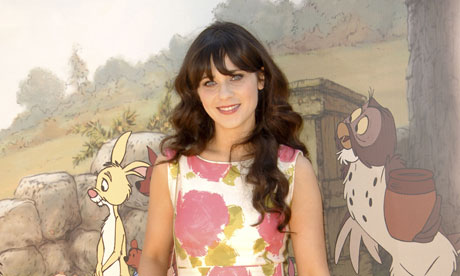
Female comedians and actors such as Zooey
Deschanel are leading the new wave of US sitcoms
Something strange is afoot in the world of the American sitcom. A
breed of character has emerged that curses profanely, talks frankly
about sex, sleeps around and drinks too much, all while wisecracking
rudely with the best of them. None of those attributes is especially original, except that these characters are all women. A fresh crop of TV comedy shows has hit the US cultural landscape anchored on a new breed of sassy, independent, freethinking woman. Building on the success of the hit Hollywood movie Bridesmaids,
which seemed to convince movie executives that male cinemagoers would
pay to see funny women, America's television channels are now also
placing a big bet on a feminine twist to some tried and tested comic
set-ups. They have even raided the worlds of independent cinema and cutting-edge stand-up to get their talent. First up is New Girl, which stars indie darling Zooey Deschanel in
her own show about a woman called Jess who moves in with three men.
Though it is an ensemble cast, the show is firmly centred on Deschanel
as its main draw. Next is 2 Broke Girls, which features another
star of the independent scene, Kat Dennings. She plays Max, a gritty
waitress with a strong line in witty put-downs that have stretched what
is previously tolerated on mainstream TV. In the first show – on the CBS
network no less – Dennings's Max responds angrily to a restaurant
customer who clicks his fingers at her to get her to come to his table.
"You think this is the sound that gets you service," she says, clicking
her fingers right back. "I think this is the sound that dries up my
vagina." That line alone inspired a wave of hand-wringing articles in
America wondering about current broadcasting standards. Finally, there is Whitney,
a show that stars Whitney Cummings, a rising stand-up comedian who has
drawn rave reviews for her comic routines. Now she has been given her
own TV show. The format is standard – it explores Whitney's life as she
lives with (and refuses to marry) her boyfriend – but network executives
have been promising the show will not pull its punches in dealing
frankly with sex and relationships. "This has been coming for a while. A
lot depends on these shows. If people respond well to them, then that
is all we are going to see. If not, then we'll have to wait another five
years to try again," said Janette Barber, a stand-up comic turned radio
host on SiriusXM satellite radio. Of course, there is a long
tradition of sassy, funny women in US television comedy. From almost the
very start of the genre, major female stars emerged, like Lucille Ball
in the classic 1950s show I Love Lucy. In the 70s Bea Arthur starred in Maude as an outspoken liberal, while Loretta Swit was nominated for 10 Emmys during 11 years in M*A*S*H. In the late 80s Roseanne Barr, as the lead character in Roseanne
took a wisecracking female lead character to new heights. However,
those series nearly always placed their female comics in the role of a
wife or mother. With a few notable exceptions – such as the TV news
comedy show Murphy Brown – they were set against a husband or with a family. That
phenomenon reached its apogee with a wave of comedy shows in the 2000s
which seemed to make a fetish of placing attractive, intelligent and
witty women in roles where they played second fiddle to often overweight
and not especially clever husbands. Shows like TheKing of Queens, Everybody Loves Raymond and According to Jim
were enormously successful using this formula. "We were seeing a lot of
this. The pretty, attractive woman who lives with a schlubby guy. Why
did these women marry these guys? They are brighter and more intelligent
and more funny than their husbands, who clearly often infuriate them,"
said Professor Robert Thompson, a pop culture expert at Syracuse
University. The new TV comedies are helping to end that.
Here the women characters are not defined by men, even as they fulfil
some of the cliches of the sitcom genre: by getting dumped, or trying to
bring spice back into a relationship or going on a first date. They put
the woman character first and are building on a number of recent female
successes, especially Tina Fey's award-winning role in 30 Rock and to a lesser extent the Amy Poehler-led comedy Parks & Recreation. But the largest influence is the runaway critical and commercial success of Bridesmaids,
which starred and was co-written by Kristen Wiig. That movie blew away
the critics with its focus on female friendships and, far more
importantly in the minds of entertainment executives, it cashed in at
the box office in spectacular style. It notched up a staggering $283m in
ticket sales, on a budget of just $32m: a paper profit of almost a
quarter of a billion. No wonder a host of follow-up films, such as the
upcoming Bachelorette, are now in the works. And no surprise
that America's TV executives hope to cash in with their female-centric
shows. "New things don't happen on TV. They happen somewhere else and TV
gloms on to them. The audience for Bridesmaids had a lot of purchasing power and they want a piece of that," said Barber. That
clear-eyed focus on the bottom line is gradually shaking up US
television's natural conservatism when it comes to recognising social
change. After all, American life is filled with several generations of
independent, working (funny) women unconstrained by their men. But TV,
many experts say, has a history of being slow to catch up with the
society it claims to reflect. Thompson points to the success of the
1960s comedy show Gomer Pyle U.S.M.C. Despite being set on a
marines base during the brutal height of the Vietnam war, the show never
once mentioned the conflict. Instead it focused on the daily
tribulations of its main character, a former petrol station attendant
who had signed on in the military. Or look at the furore surrounding the
coming out of Ellen DeGeneres as a lesbian on her sitcom Ellen
in 1997. Though it became a momentous event in TV history, gay people
in actual public life in America were already prominent and had long won
numerous civil rights and social acceptance. But with these new shows
it is possible that the medium is at last catching up with the reality
of everyday life. "We are finally at the point when TV is not so many
steps behind. Soon it might even sometimes be a few steps ahead," said
Thompson. However, there is still a way to go when it comes to the
treatment of women in comedy. It has long been a male-dominated world.
"I'm saddened that we are still talking about women in comedy as if it
were an oddity. When I first started doing stand-up in the 80s, I was
usually introduced: 'And here's something different – a female comic!',"
said Judy Carter, a comedian turned motivational speaker. Despite the
wave of new women-led shows, there still does seem to be a double
standard when it comes to female comics. They are not entirely judged on
the quality of their jokes, but also on their gender, in a way male
comics are not. Perhaps the new shows will help change that. To do so
they will have to be successful in terms of ratings, thus generating the
required advertising revenue to make them a standard part of the
broadcasting ecosystem. The early signs are good. New Girl's debut scored some 10.1 million viewers and was the most popular show of its night among younger viewers. Meanwhile, 2 Broke Girls
got a huge 19.2 million viewers for its heavily promoted first show. If
such performances are kept up, the shows might cease to be viewed as
sitcoms featuring funny women and just seen as funny TV shows. "I look
forward to the day when we laugh at a movie such as Bridesmaids, and we don't even notice: 'Oh my God, women are funny!' Funny is funny regardless of gender," said Carter.
Transformers: Dark of the Moon – the saviour of 3D?
Michael Bay's latest robo-fantasy offers mindblowing visuals, but in a world falling out of love with 3D, it can't afford to lose its plot
Smokin' visuals – but is it enough? ... scene from Transformers: Dark of the Moon
As I race inside the auditorium at Paramount Pictures – running a bit late, it must be said – one of the press people dutifully calls me back to inform me that this screening of 20 minutes or so of footage from Michael Bay's upcoming Transformers: Dark of the Moon is being staged for one reason and one reason only: for journalists to talk about the 3D. They would rather we did not comment on the story.
What strange timing. Not long after my visit to the studio's London offices, nestled in beside a number of similar media HQs in Soho's Golden Square, an interview is being published with DreamWorks Animation's Jeffrey Katzenberg, in which he responds to the news that US audiences are choosing for the first time to see blockbuster movies in old-fashioned 2D, even when the more celebrated option is available. The phenomenon emerged for Pirates of the Caribbean: On Stranger Tides last month and continued for Kung Fu Panda 2 two weeks ago.
Previously, filmgoers have always seen 3D screenings in greater numbers, an unbroken rule that has fuelled the format's rapid growth. 3D tickets attract a premium, which means yields are higher and end-of-year box office charts are slanted towards movies that are shown in stereoscope. Directors of mainstream films not available in the more expensive form have begun to find themselves questioned as to why: Inception's Christopher Nolan being the most high-profile example.
An eminently quotable debate here, sparked by one critic's assertion that he was simply fatigued from all the worthy but slow films he'd been watching. Your own productions, bound by genre conventions and the 2min limit, are typically fast-paced. You could pick out one or more of the well-known names quoted below to support/interrogate your own choices, and the impact of these choices:
Dan Kois's confession that he has 'cultural fatigue' after watching too many boring movies has sparked a bout of soul searching by his fellow film critics
Terrence Malick's perplexing Palme d'Or winner, The Tree of Life. Is it a film to enjoy or endure
A troubling issue has gripped film critics. Are "boring" films really good for you? And if so, are cinema audiences of the future likely to sit still long enough to take their medicine?
On one side of the aisle sit those critics who embrace the best of popular entertainment and who regard slower-paced films as the equivalent of eating their "cultural vegetables"; on the other side are arthouse aficionados who much prefer an oblique or contemplative work to the hectic approach of multiplex blockbusters such as The Hangover II or Pirates of the Caribbean.
With the release this summer of a new slate of potentially challenging, thoughtful films and the announcement of a British release date for Terrence Malick's perplexing Palme d'Or winner The Tree of Life, the question has prompted a bout of popcorn throwing among British and American critics.
The debate kicked off when American critic Dan Kois confessed he was "suffering from a kind of culture fatigue". Writing in the New York Times, he asked whether some films are designed to be endured and then remembered with fondness, rather than enjoyed at the time. More controversially, Kois questioned his own assumption that glacial speed was the mark of cinematic sophistication.
The immediate ancestor of the slasher film is Hitchcock's Psycho (1960). Its elements are familiar: the killer is the psychotic product of a sick family, but still recognizably human; the victim is a beautiful, sexually active woman; the location is not-home, at a Terrible Place; the weapon is something other than a gun; the attack is registered from the victim's point of view and comes with shocking suddenness. None of these features is original, but the unprecedented success of Hitchcock's particular formulation, above all the sexualization of both motive and action, prompted a flood of imitations and variations. In 1974, a film emerged that revised the Psycho template to a degree and in such a way as to mark a new phase: The Texas Chain Saw Massacre (Tobe Hooper). Together with Halloween (John Carpenter, 1978), it engendered a new spate of variations and imitations.
The plot of Texas Chain Saw is simple enough: five young people are driving through Texas in a van; they stop off at an abandoned house and are murdered one by one by the psychotic sons of a degenerate local family; the sole survivor is a woman. The horror, of course, lies in the elaboration. Early in the film the group picks up a hitchhiker, but when he starts a fire and slashes Franklin's arm (having already slit open his own hand), they kick him out. The abandoned house they subsequently visit, once the home of Sally's and Franklin's grandparents, turns out to be right next door to the house of the hitchhiker and his family: his brother Leatherface; their father; an aged and only marginally alive grandfather; and their dead grandmother and her dog, whose mummified corpses are ceremonially included in the family gatherings. Three generations of slaughterhouse
― 193 ―
workers, once proud of their craft but now displaced by machines, have taken up killing and cannibalism as a way of life. Their house is grotesquely decorated with human and animal remains—bones, feathers, hair, skins. The young people drift apart in their exploration of the abandoned house and grounds and are picked off one by one by Leatherface and Hitchhiker. Last is Sally.
According to Clover, the final girl is typically sexually unavailable or virginal, avoiding the vices of the victims (sex, narcotic usage, etc.). She sometimes has a unisex name (e.g., Teddy, Billie, Georgie, Sidney). Occasionally the Final Girl will have a shared history with the killer. The final girl is the "investigating consciousness" of the film, moving the narrative forward and as such, she exhibits intelligence, curiosity, and vigilance.
One of the basic premises of Clover’s theory is that audience identification is unstable and fluid across gender lines, particularly in the case of the slasher film. During the final girl’s confrontation with the killer, Clover argues, she becomes masculinised through "phallic appropriation" by taking up a weapon, such as a knife or chainsaw, against the killer. Conversely, Clover points out that the villain of slasher films is often a male whose masculinity, and sexuality more generally, are in crisis. Examples would include Norman Bates in Alfred Hitchcock's Psycho. Clover points to this gender fluidity as demonstrating the impact of feminism in popular culture.
The phenomenon of the male audience having to identify with a young female character in an ostensibly male-oriented genre, usually associated with sadisticvoyeurism, raises interesting questions about the nature of slasher films and their relationship with feminism. Clover argues that for a film to be successful, although the Final Girl is masculinised, it is necessary for this surviving character to be female, because she must experience abject terror, and many viewers would reject a film that showed abject terror on the part of a male. The terror has a purpose, in that the female is 'purged' if she survives, of undesirable characteristics, such as relentless pursuit of pleasure in her own right. An interesting feature of the genre is the 'punishment' of beauty and sexual availability (Leading to the idea that "Sex = Death" in Horror Movies)
Examples of final girls
Before the release of Alien 3, Clover identified Ellen Ripley from the Alien franchise as a final girl. Elizabeth Ezra continues this analysis for Alien Resurrection, arguing that by definition both Ripley and Annalee Call must be final girls, and that Call is the "next generation of Clover's Final Girl". Call, in Ezra's view, exhibits traits that fit Clover's definition of a final girl, namely that she is boyish, having a short masculine-style haircut, and that she is characterized by (in Clover's words) "smartness, gravity, competence in mechanical and other practical matters, and sexual reluctance" being a ship's mechanic who rejects the sexual advances made by male characters on the ship. Ezra notes, however, that this identification of Call as a final girl is marred by the fact that she is not a human being, but an android.
Christine Cornea disputes the idea that Ripley is a final girl, contrasting Clover's analysis of the character with that of Barbara Creed, who presents Ripley as "the reassuring face of womanhood". Cornea does not accept either Clover's or Creed's views on Ripley. Whilst she accepts Clover's general thesis of the final girl convention, she argues that Ripley does not follow the conventions of the slasher film, as Alien follows the different conventions of the science fiction film genre. In particular, there is not the foregrounding in Alien, as there is in the slasher film genre, of the character's sexual purity and abstinence relative to the other characters (who would be, in accordance with the final girl convention, killed by the film's monster "because" of this). The science fiction genre that Alien inhabits, according to Cornea, simply lacks this kind of sexual theme in the first place, it not having a place in such "traditional" science fiction formats.
Laurie Strode (from Halloween I, II, and H20) is another example of a final girl. Tony Williams notes that Clover's image of supposedly progressive final girls are never entirely victorious at the culmination of a film nor do they manage to eschew the male order of things as Clover argues. He holds up Strode as an example of this. She is rescued by a male character, Dr. Samuel Loomis, at the end of Halloween. He holds up Lila Crane, from Psycho, as another example of a final girl who is saved by a male (also named Sam Loomis) at the end of the film. On this basis he argues that whilst 1980s horror film heroines were more progressive than those of earlier decades, the gender change is done conservatively, and the final girl convention cannot be regarded as a progressive one "without more thorough investigation".
Williams also gives several examples of final girls from the Friday the 13th franchise: Alice from Friday the 13th, and the heroines from Part II and Part III. (He observes that Friday the 13th: The Final Chapter does not have a final girl.) He notes that they do not conclude the films wholly victorious, however. The heroines from Parts 2 and 3 are catatonic at the ends of the respective films, and Alice survives the monster in the first film only to fall victim to "him" in the second. The final girl in Part 2 is carried away on a stretcher, calling out for her boyfriend (which Williams argues again undermines the notion of final girls always being victorious). Moreover, Ginny's adoption of the monster's own strategy, in Part II, brings into question whether the final girl image is in fact a wholly positive one.
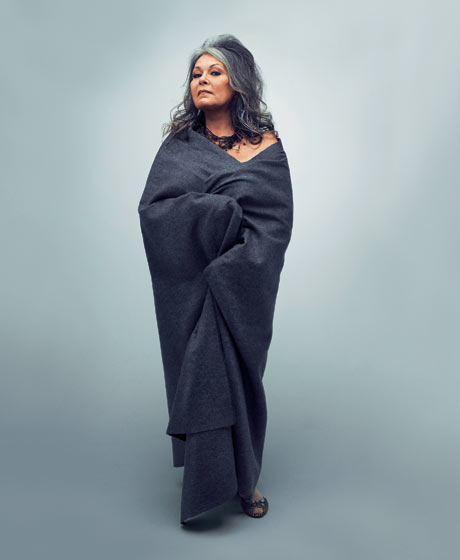
I made the mistake of thinking Marcy was a powerful woman in her own right. I've come to learn that there are none in TV. There aren't powerful men, for that matter, either – unless they work for an ad company or a market-study group. Those are the people who decide what gets on the air and what doesn't. Complaining about the "created by" credit made an enemy of Matt. He wasted no time undermining me, going so far as to ask my co-star, John Goodman, who played Roseanne Conner's husband, Dan, if he would do the show without me. (Goodman said no.) It was then that I had my first nervous breakdown. [excerpt]
I'll cross-post this on several blogs as it touches on gender, regulation, class prejudice and the general financial machinations of the entertainment business. Assuming you're unaware of what 'Roseanne' is, a few clicks on wikipedia or youtube will swiftly bring you up to speed - it was a hugely successful US sitcome with the USP of centring on a working-class family (with money problems and lousy jobs, not the usual facsimille of working class, or 'labour as Roseanne Barr refers to it, with a tough domestically inept/disinterested woman at the head of the family).
There are very, very few comparisons - aspects of Taxi perhaps, maybe even Married With Children.
Her article, and forthcoming book, reveal just how unprepared the US TV network (whose working practices, being fundamentally driven by financial calculations and audience testing, are not so different to those of the film biz) was to let an unvarnished depiction of working class folk go on, let alone allow a female creative lead the way. Roseanne Barr found that her own creation was credited to an entirely uninvolved male producer, who went on to make her life hell.
There may be a 'PC' moral behind this, but it is a fascinating read from a very un-PC lady.
Roseanne Barr: 'Fame's a bitch. It's hard to handle and drives you nuts'
With a hit TV show, Roseanne Barr could get the best tables in the best restaurants. Never mind about the empty flattery, the nervous breakdowns and the feeling of being used for 10 years. But she's not bitter. Honest
'I walked into the producer's office, held up a pair of wardrobe scissors to show her I meant business - "This is no character! This is my show. You watch me. I will win this battle." ' Photograph: Robert Maxwell/Art + Commerce
During the recent and overly publicised breakdown of Charlie Sheen, I was repeatedly contacted by the media and asked to comment, as it was assumed that I know a thing or two about starring on a sitcom, fighting with producers, nasty divorces, public meltdowns and bombing through a live comedy tour. I have, however, never smoked crack or taken too many drugs, unless you count alcohol as a drug (I don't). But I do know what it's like to be seized by bipolar thoughts that make one spout wise about tiger blood and brag about winning when one is actually losing. It's hard to tell whether one is winning or, in fact, losing once one starts to think of oneself as a commodity, or a product, or a character, or a voice for the downtrodden. It's called losing perspective. Fame's a bitch. It's hard to handle and drives you nuts. Yes, it's true that your sense of entitlement grows exponentially with every perk until it becomes too stupendous a weight to walk around under, but it's a cut-throat business, show, and without the p