Showing posts with label women. Show all posts

Friday, October 23, 2020

A Woman's Place is in...the Director's Chair?

IN BRIEF: A collection of articles on the growing controversy over women's secondary role across every aspect of the film industry. Use the tags to see more on this


A major source: 


BECHDEL TEST:


2019s films that pass (therepresentationproject.org)

2021
FORGOTTEN FEMALE FILMMAKERS. Guardian.


IMPROVEMENT? 16% OF HIT MOVIES BUT...
When streamed productions (Netflix etc) are considered, this drops to 10%. Guardian.

2020 December

Geena Davis awards $25k to filmmakers from under-represented backgrounds in programme with NBC-Universal. Deadline.
How Gemma Arterton set up her own female-led production company, Rebel Park Productions. Guardian

2019: Top-earning 'actress' list/analysis v highest paid actors


Useful article at http://www.netribution.co.uk/people/106/1402-warped-imaginations-darklights-female-horror-directors to look at. The case of Sharon Maguire (look at the long gaps in her IMDB entry) suggests the film industry is still rather sexist? What do you think?
You'll find this is a much-discussed topic, with many references in books written by film insiders (and of course in Film Guardian articles)
Have a look at http://www.birds-eye-view.co.uk/ too.

http://www.womenandhollywood.blogspot.com/  is rather useful too!

Some additional articles: 

Jane Campion: 'I make films so I can have fun with the characters'

Portrait of the artist: Mira Nair, film director - 'Why are there so few women directors? Oh my God, I want to shake everyone and ask them that question'

Jennifer's Body: a feminist slasher film? Really? - It's written and directed by women, and stars a man-eating schoolgirl – but is Jennifer's Body as feminist as it thinks it is?


It's a scream! - As Halloween draws near, Wendy Roby explores a new wave of films, websites and festivals feeding women's growing hunger for horror


An intriguing addition from Sigourney Weaver, famed for taking the final girl into space/establishing the possibility of making money with a female action hero with Alien and its sequels:
This article contains a caustic rebuttal, though many of the comments that follow the article are supportive of Weaver.

The view from a broad: Sigourney Weaver speaks out against bosomism
The Avatar actor has claimed that James Cameron would have won the best director Oscar if he were a woman. Of course. Laura Barton 14.4.10

You know the truly great thing about breasts? They can really get you anywhere you want to be. Earlier this week, Avatar actor Sigourney Weaver explained that mammary glands were behind the film's director, James Cameron, losing out on an Oscar to Kathryn Bigelow, director of The Hurt Locker – and, lest you forget, the first women to win an Academy Award for best director: "Jim didn't have breasts, and I think that was the reason," she told a Brazilian news website. That's right Sigourney, women have been using their breasts to oppress men for centuries. Weaver, of course, has first-hand experience of bosomism, having found fame as the first female action hero, Lieutenant Ellen Ripley in Alien back in 1979. "It had nothing to do with feminism," she once announced. "Men decided to make Ripley a woman for commercial reasons."
Breasts are why we got the vote too, of course. And the only reason they let Marie Curie have those Nobel prizes and stuff. Still, if Cameron wants some breasts of his very own, we believe he need only pop by Primark's children's swimwear department.
This is quoted from the article "This much I know: Gurinder Chadha" [Bend It Like Beckham]
I wish there were as many female directors as there are male. Women bring a brevity to female characters, a lightness and humour among tragedy. We understand the gamut of emotions; that we can burst into tears and then laugh.

An interesting tale of how Hollywood's reluctance to trust fem directors led to a period in the wilderness for critically acclaimed Indie director Lynne Ramsey at http://www.guardian.co.uk/film/filmblog/2010/apr/22/lynne-ramsay:
It's been far too long in the wilderness for the woman who emerged in the late 90s as the UK's most exciting young auteur. She won Cannes jury prizes for her shorts, and then a Bafta in 2000 for her wildly-acclaimed debut feature Ratcatcher.
...
Ramsay turned 40 last December. So where has she been for the past decade, in which time she has been overtaken by Andrea Arnold as the critically-anointed heir to Ken Loach? She shot a couple of music videos – check out the Doves promo for Black and White Town on YouTube for those distinctive Ramsay stylings. But that's scant return for such a talent.

Kate Madison's work on the £25k Born to Hope is discussed in The Guardian.

It features strong language and pulls no punches, but the Final Girl blog, by a filmmaker at the very low budget end, can be not only very entertaining but also highly insightful and illuminating - the blog includes blow-by-blow accounts of the blogger's film-making experiences to date: http://finalgirl.blogspot.com/2009/04/so-i-made-movie-part-one.html


[March 5th 2011]
After Bigelow's 2010 success, whither the 2011 crop of fem Oscar nominees?
Hadley Freeman is straight to the point with her article, 'So why do women film-makers find it so hard to win an Oscar?'
After Kathryn Bigelow became the first woman to be given the best director award at last year's Oscars, there was hope that a traditionally male-dominated barrier had been broken at last. This hope looked all the more plausible because of the number of critically lauded films released in the wake of her award directed by women, notably Winter's Bone, directed by Deborah Granik, and The Kids are All Right, by Lisa Cholodenko.
Yet while both of these movies have been nominated for best film, and both feature actors who have received nominations, their directors have been ignored.
"Last year Kathryn opened doors for female directors so I was particularly disappointed that Lisa didn't get a nomination," says Celine Rattray, producer of The Kids are All Right.
Notably, the subject matter of Bigelow's film, The Hurt Locker, was war and there was only one woman in the cast, raising the question whether a woman might be able to win a film award, but she has to make a very masculine film to do so.
"I think the nominations this year in general were for flashy movies and maybe The Kids are All Right was just a little too heartfelt," suggests Rattray.
Others have claimed that Bigelow's triumph was not so much the breaking of a ceiling but a mere blip: "After Kathryn Bigelow's supremely satisfying double win for best director and best picture last year, it's particularly disheartening to see Winter's Bone and The Kids are All Right, both made by women, relegated to 'great film—who directed it again?' status," Dana Stevens wrote on Slate.com.
One fem nominee for the 2011 Oscars (4 nods, incl. Best Picture), Debra Granik, speaks of the impact of Bigelow's breakthrough ... but also of how she found herself as typecast as any actress when her debut feature made waves:

Down to the Bone won two awards at Sundance in 2004, for best director and best actress, and Granik was soon being assailed with scripts about abused, self-destructive women trying to rise above their circumstances. "What seemed to make women interesting was the degree to which they were distraught or incapacitated," she says. "I need and want to see capable women. I don't like to see them weep all the time."
Although she isn't nominated in the directing category at the Oscars, she says Kathryn Bigelow's win last year, for The Hurt Locker, gave her a tremendous shot of optimism. At film school, her class was roughly half men, half women, but even now, only one in 10 movies is directed by a woman. "To me, the quiet work is being done," she says. "In the independent world, there's just a crew of men and women working together. On the ground, day to day, you don't have to wait for a Bigelow effect."
The article is also useful for the insight into Indie filmmaking, and the struggle to get funding.
Granik had been featured before in the Guardian:
Women directors: the new generation
Debra Granik, Nanette Burstein and Sanaa Hamri discuss their ground-breaking work
The "Bechdel test", which appeared in Alison Bechdel's comic strip in 1985, goes like this: does the film have at least two women in it, who talk to each other, about something besides a man? As Debra Granik, protests, laughingly: "That's not asking so much!" but most films still fail it.
...
Granik is at pains not to "make these reductive gender things" when talking about what it is to be a female director, but she admits that "the idea of the auteur, the bad-boy director" has established "a kind of protocol that was very subjugating of other people. One thing that would be positive from women entering the field would be less bad behaviour.
"

[UPDATE 9.3.2011]
The figure is around 6-15% in the UK...
...the % of film directors who are female!

I commend the full article), but here's an extract and then a video containing a rather useful but also intriguing bit of theory (v. useful for hoovering up a few marks...):
Birds Eye View started out as a positive response to the fact that women make up only 7% of film directors (a statistic that remains accurate for Hollywood, and that has fluctuated between 6-15% in the UK over the last few years), and around 10-18% of screenwriters (depending on which year, and which side of the Atlantic). That's 6-18% of the creative vision in the world's most powerful medium. We live in a visual culture, and what we see on screen profoundly affects the way we see ourselves and each other. Film offers us an incredible thing – an immersive trip into someone else's universe, someone else's vision of the world. But if that vision is dominated by men then we are missing out on so much complexity, richness, diversity and creativity.
Here's the theory, wrapped up in a short but entertaining vid for you...

HAVE YOU GOT ANY MORE SUGGESTIONS? PLEASE ADD A COMMENT IF SO...

Thursday, October 10, 2019

WOMEN Disney back Davis gender script check

I've posted on the issue of women's under-representation at all levels of the film industry, including the nature or narrative significance of onscreen roles, since 2008.

In that time the Bechdel Test has become quasi-law in parts of Scandinavia and the #metoo movement has blown the lid of the routinised abusive behaviour of powerful men in the industry.

Changes, but still statistically the central issue remains pretty similar.

I'm doubtful that this move will achieve a momentous shift, and not entirely certain it's an entirely good thing: content analysis devoid of context - useful to add precision to analysis of overall trends but a fundamental impingement on storytelling freedom (of expression) potentially?

However YOU see it, it is a significant move, and as it's Disney, now seemingly headed for a 40/50% share of the global film market, who are partnering with Davis to trial and develop the AI (which scans scripts for gender terms and roles), it COULD lead to fundamental changes.

Though what will they do if the AI pings that their Marvel movies are fundamentally problematic...?
....

The Geena Davis Institute on Gender in Media was founded in 2007 after the actor – who won a best supporting actress Oscar in 1989 for The Accidental Tourist – became concerned about the male-dominated entertainment her young daughter was consuming.


At the summit, Davis added: “We don’t have enough female role models to inspire change. We need to see it in fiction to create the cultural change we need. If we see more women on screen as corporate leaders, scientists and politicians, there will be more women in real life taking up these roles.”


Geena Davis announces 'Spellcheck for Bias' tool to redress gender imbalance in movies https://www.theguardian.com/film/2019/oct/09/geena-davis-institute-gender-media-disney-machine-learning-tool?CMP=Share_AndroidApp_Blogger

Saturday, August 26, 2017

WOMEN IN INDUSTRY 'only 7% of film directors are' ...

The figure is around 6-15% in the UK...
...the % of film directors who are female!

IN BRIEF...
This is 1 of 2 lengthy posts on the huge topic of the clearly differential treatment of women at all levels of the film industry - there are relatively few senior executives, producers, scriptwriters, directors, actors given lengthy dialogue, even women in crowd scenes are a minority ... This post (a short video and an overview of female directors, including the campaigning company Birds Eye Views) and its companion post - are a start ... look for much more using the female fimmakers tag.

Its a story that just won't go away, and the BFI are playing their part to publicise the issues.


I'll add the full article below (and see the longer post on fem dirs.), but first, an extract and then a video containing a rather useful but also intriguing bit of theory (v. useful for hoovering up a few marks...):
Birds Eye View started out as a positive response to the fact that women make up only 7% of film directors (a statistic that remains accurate for Hollywood, and that has fluctuated between 6-15% in the UK over the last few years), and around 10-18% of screenwriters (depending on which year, and which side of the Atlantic). That's 6-18% of the creative vision in the world's most powerful medium. We live in a visual culture, and what we see on screen profoundly affects the way we see ourselves and each other. Film offers us an incredible thing – an immersive trip into someone else's universe, someone else's vision of the world. But if that vision is dominated by men then we are missing out on so much complexity, richness, diversity and creativity.
Here's the theory, wrapped up in a short but entertaining vid for you...


Saturday, July 23, 2016

WOMEN Rotten UGC CRITIC RATINGS are male-dominated


In the past, films relied on good reviews plus word-of-mouth. Today RT and IMDB have digitally replaced word-of-mouth and become hugely influential consumer websites as a result. Take these early audience reviews on RT: “Non-funny, man hating” … “Jokes about men, wasn’t exactly funny” … “garbage third wave feminism”. No surprise, all these were written and posted on the site by men. Each gave the film half or one star. “Ton of fun” … “Incredibly enjoyable” … “seeing it for third time tomorrow”. All these four and five-star reviews were written and posted by women.... Search on IMDB and you find thedata breakdown for reviews. Ghostbusters scores an average 5.3 out of 10. But for women the average score was 8.1, compared with 4.6 for men. But men’s scores matter more, because 22,500 men wrote up reviews on IMDB, compared with 7,500 women.

For liking it, I was criticized for “pandering to politically correct, radical feminist rubbish” by one reader, a sentiment echoed by another who tweeted that I “played it safe to stay politically correct” for labelling Feig’s achievement a “blast”. Many libelously accused me of accepting money from Sony Pictures to solicit a warm response. And it wasn’t just one or two tweets targeting me, but a host. 
The film has since opened in the UK (it opens in the US on Friday), but over the weekend, when the Ghostbros (as they’re commonly referred to now) went on the attack, no one apart from a small pool of critics had watched the film – meaning they were trashing it sight unseen. It’s likely they’re to blame for the film’s drastically low rating on IMDb, where over 57% of users gave it the lowest possible score. On Reddit, some have banded together in a spiteful effort to keep the favorable reviews from appearing on the community-led website.

Wednesday, April 13, 2016

GENDER Stats on invisible mute women and male writers

Lots of killer statistics from multiple research papers here, detailing how little dialogue women get, how few films (18%) where 2 of the 3 lead roles are female, the dominance of male writers ... even the absurd long-term proportion of women in crowd scenes (17%!).

Also a good point, echoing one I make often, about the dismissive treatment of 'chick flicks' and the lack of a binary (we don't speak of men's movies!).

Tuesday, November 10, 2015

WOMEN, DISTRIBUTION Female led film needed male star for funding

There have been a slew of stories over the past year about the unequal status of women in the film industry. I've highlighted and commented on a few, but really that's just spotlighting the tip of the iceberg.

This latest account of ingrained sexism highlights how deeply ingrained the attitudes and desires of distributors are. Seeking financing for a film, a female star finds blanket rejection until a male star is added to the package.

There we can see the primacy of the star as the continuing primary initial concern of a distributor (paying upfront, in advance of production, is often the funding device for Indies), with this added gender twist. Barring a few exceptions, race is likely to remain a factor too.

Will this change? The impact of the websites, social media and high profile media interventions by a growing number of stars, and that of the Sony hack revelations, are creating pressure for a fairer system - and in a numbers business it certainly won't pay to alienate half of your audience.

I wouldn't like to put a timescale on that though - and think it will take an organised boycott of a tentpole to make serious leeway, something that is hard to conceive of in 2015. The Hunger Games could have been that film - its a disgrace that the female star who drives the entire marketing effort is somehow not given the financially superior package to male co-stars, supporting players all in what has become a Jennifer Lawrence vehicle.

In recent months, a number of Hollywood actors have come forward to speak out about misogyny in the entertainment industry. Jennifer Lawrence recently publicly attacked the gender pay gap in the industry in an essay that went viral. And over the weekend, Sharon Stone recalled weeping over unequal salaries more than 20 years ago, following the release of Basic Instinct.On Sunday in Los Angeles, during a panel discussion dedicated to independent film at AFI festival, actor Olivia Wilde joined the chorus, recounting the hurdles she went through to get a female-led production financed independently.

Sunday, May 10, 2015

WOMEN underrepresented even in crowd scenes

Anything but a fan of Freeman (I'd usually approach her writing with the appetite I'd have for a Marmite cake...), the 80s movie headline drew me into this, an excerpt from what appears to be her autobiography (correction: turns out to be a book on 80s movies).

It turns out to be a very interesting piece, discussing:
Female, teen and tween viewership (yes, uses and gratifications ahoy...), not least of sexual scenes or storylines
How contemporary films appear to punish female teen characters for sexual activity
Studios customary cutting of any counter-hegemonic messages (including, in these examples, abortion)
The role that sponsorship or tie-ins or product placement can have in ensuring conservative messages prevail (ie, reinforcing the studios' conservative instincts, the point above)
A study, and research institute, launched by an iconic actress who began to worry about the messages subliminally sent to her own young children, especially noting how women were given less space and visibility on screen

Tuesday, May 05, 2015

WOMEN IN INDUSTRY Tumblr blog reveals film biz sexism

NB: The full article referred to below, and the Tumblr blog it is about, contains some quite frank sexual terms, reflecting the nature of much of the verbal abuse faced by female film-makers.
Quite a racy title, but this has generated a lot of attention:  
Nicole Kassell first heard about the Tumblr blog Shit People Say to Women Directorslast week, when a female film-maker friend she was dining with mentioned it on the assumption she already knew of it. “I did go look at it and proceeded to get very depressed,” says Kassell, director of the films The Woodsman and A Little Bit of Heaven and episodes of TV shows such as Better Call Saul, The Killing and The Following.The site, which launched on 22 April and is causing a storm among film industry insiders, especially women, is a catalog of anonymous stories about the sexist things that happen to women working on film sets. [Shit People Say to Women Directors blog spotlights Hollywood's blatant sexism.]


Use the tags to find more linked content on this topic. There are also further articles, such as this one, which draws together research showing that female directors seem to get inferior distribution deals to their male peers.

Wednesday, April 22, 2015

INDUSTRY GENDER 2015 box office looks pretty in pink

Which is a terribly strangulated, stereotyped way of saying that a major exhibitor (owner of a chain of cinemas, or theatres as they're termed in American jargon) sees a much more female-friendly slate of releases as leading to potential record-breaking box office take in 2015.

Monday, November 17, 2014

GENDER: Women less successful on Kickstarter?

Some useful data here in a survey reporting on the comparative levels of success of male/female Kickstarter appeals; females feature in none/1 of top ten most successful appeals across a range of media categories, and female teams fare significantly less well than male teams. However, the report also notes that females often look for smaller amounts (<$5k) and are just as successful in this limited range; females often look specifically to friend and family circles, potentially limiting the scale/ambition of appeals.

Wednesday, October 22, 2014

WOMEN BJD Rene Zellweger - Just a pretty face?

There has been quite a commotion over Rene Zellweger's re-appearance in the media spotlight this past week, specifically surrounding her radically altered facial appearance. This is an actress, lets not forget, who piled on extra pounds to play a 'chubby' Bridget Jones (actually still well below the average size/figure of a British, never mind American, woman of her height, a quite invidious representation).

Steve Rose posts an interesting article which argues (quite briefly!) that, irrespective of gender, an actor's trade is centred on their face; it's their brand he effectively argues, with the close-up a key tool of cinema.

On the other hand ...

“Where did Renee Zellweger’s face go?”

Friday, March 21, 2014

Male Gaze: Stop leering at Scarlett Johansson!

That's the plea from Bronwen Clune, a feminist critic writing in The Guardian, fed up with encountering profiles of female celebrities which linger on their bodies, and describe them in excessive detail. She specifically name-checks the male gaze theory:
We’re all familiar with the concept of the “male gaze”, particularly when it comes to Hollywood film – the lens lingering on the curves of leading ladies’ derrieres (Lane talks of Johansson’s “contours” of reputation) – a scopophilic guilty pleasure. And, let’s face it, women’s bodies are delightful things to look at, one of the reasons media executives conveniently argue that the economics of the industry make it impossible to avoid stereotypes of women.
But when respected male writers profile powerful women, is it wrong that we should expect more than lengthy, voyeuristic wet dreams? In the cases of both Hardy and Johansson, the writers of their profiles are accomplished and well-regarded. Their audiences, a “new intelligentsia”, are likely to congratulate themselves on their progressive values. Their subjects are powerful and sexually subversive women. Yet in both cases the women are reduced to something resembling not much more than titillating, slightly fearsome, but ultimately decorative objects.
She notes how one actress was described as having "nice tits" - something the male writer even went as far as to confirm with her housemate - and goes on to note:
I’m reading a profile of Scarlett Johansson by Anthony Lane where she appears as if “made from champagne”, her laugh “dry and dirty, as if this were a drama class and her task was [sic] to play a Martini” and her backside, “barely veiled in peach-colored underwear”. As Slate points out this is not the first time Johansson has inspired “culture writers to do horrible things with words”
Does this chime with your experience? Do you think seemingly respectable highbrow media (as opposed to tabloid press/TV) are just as guilty of needless objectification? Any examples you want to share?

Tuesday, November 19, 2013

Bechdel Test becomes ratings system in Sweden

The Harry Potter series would fail, so too the Star Wars franchise ... Sweden has made an interesting move in introducing a Bechdel ratings system. Currently run by one organisation, a state rating board has expressed a positive view on this.
Read more here.

Wednesday, June 12, 2013

Joe Queenan: Superhero tentpoles killing cinema?

Queenan argues women are used as mere ornamentation
Highly recommend Joe Queenan's writing - I don't necessarily agree with all of his arguments, but the opinioniated style of it is refreshing and enjoyable (try Confessions of a Cineplex Heckler - selling for 1p on Amazon!)

A subject he's given views on before, he returns here to the issue of the dominance of superhero tentpole franchises (+ other sundry fantasy/sci-fi epics):
As Steven Soderbergh recently complained, these films are sucking the life out of motion pictures, diverting virtually all of the industry's resources into insanely expensive "tentpole" films that supposedly prop up other projects.
In this article he's particularly focussed on nailing the questionable ideology that he sees as underpinning most of these films. Here's an excerpt - do you agree?
This thing is starting to get old. There are too many superhero films: their storylines are all beginning to run together. It is a genre dominated by the thoroughly unoriginal notion that you cannot trust the government. Even when you can trust the government, you cannot trust all of it. And even the branches you can trust aren't much help, because they are incompetent. To save humanity, one must rely on a bootstrap operation headed by a dedicated go-getter and self-starter. At heart, all superheroes are Republicans.
He also addresses the very much secondary, window-dressing or ornamental role of female characters:
In superhero movies, women are almost always accessories. This is true even if they themselves are superheroines. The men do the heavy lifting; the women serve an ornamental function. This is why we are all the way up to Iron Man 3 and Batman 7, but have not seen a Supergirl film since 1984, or a Wonder Woman film ever (supposedly, it is coming this year). The 12-year-old boys for whom superhero movies are made are not interested in women. They may not even be interested in girls. They are certainly not interested in girls with superpowers.
(read the full article)

Monday, May 13, 2013

Brave: Merida sexualised for sequel?

A good illustration of basic points about how ideology permeates even seemingly bland, inoffensive fare such as Disney (though once you begin some wider reading you'd be alerted to the wealth of writing on the ideology behind The Mouse) comes with controversy over the redesigned animated character of Meridia for a pending Brave sequel.
Here's a sample quote from a detailed Guardian article (with illustrative pics + vids) on this:
Chapman, who was replaced by Mark Andrews part way through the production of Brave but maintained a co-director's credit, said Disney had completely missed the point when creating the new version of her creation. "I think it's atrocious what they have done to Merida," she wrote to her local newspaper, the Marin Independent Journal. "When little girls say they like it because it's more sparkly, that's all fine and good but, subconsciously, they are soaking in the sexy 'come-hither' look and the skinny aspect of the new version. It's horrible!
"Merida was created to break that mold," she added. "To give young girls a better, stronger role model, a more attainable role model, something of substance, not just a pretty face that waits around for romance."
Any thoughts on this? Add a comment below.

Saturday, January 05, 2013

Cinema in 2013 will be...

Lengthy feature, broken down into shorter themed sections, from the Gdn Film Blog (if you don't already follow it you should!) here on what 2013 will bring for the cinema industry: read the article here or (partially reproduced) below.  

Care to add your own predictions as a comment? Will the 3D boom continue or tail off? Will home cinema 3D once again undermine cinema? Will streaming overtake DVD sales as a source of revenue? Will the window between exclusive theatrical exhibition and DVD/TV/streaming continue to shrink? Will the US audience continue to shrink as a % of Hollywood revenues for its own films - and if so, will this lead to greater multi-ethnicity in the casting of leads, or a shift away from depicting American power (surely a key tool of US political hegemony)? Will digitisation open up greater opportunities for Indie producers ... or will the tentpole strategy (closely tied to franchising sequels, prequels and remakes/reimaginings) continue to maintain big 6 global dominance? Will YOU go to see any film in the cinema in 2013 - or turn increasingly to viewing film on tablets, laptops etc?

Brits in Spandex and girl power: movie trends that will keep us talking in 2013

Last year, Hollywood was flush with international cash and films starring Matthew McConaughey. What will this year hold?
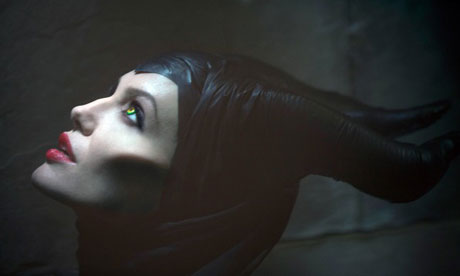
Angelina Jolie as Maleficent
Angelina Jolie as Maleficent represents the latest trend for Actresses of a Certain Age Who Aren't Really That Old: playing the bitch. Photograph: Disney

Time travel was popular. Prequels were hot. As were guns-for-hire, vampires and movies set on boats. Which of the year's cinematic trends, people, cultural avatars and epiphenomenon are most likely to set the agenda for 2013?

Jennifer Lawrence

In X-Men First-Class, Jennifer Lawrence wore the lightly stunned look of someone suffering from an acute case of Newcomer Bends. But then she narrowed her eyes, strung her bow and fired The Hunger Games towards $686m: Lawrence's imperturbability was revealed as the genuine article. The scene in Silver Linings Playbook where she walks into de Niro's lair and has him eating out of her hand in under five minutes may just win her an Oscar at the tender age of 22. If that weren't reason enough for New York magazine to put her at the top her their "Celebrity Brunch League" – the lost of famous people they'd most like to have pancakes with – the editors listed a few more:
She complains about her fussy premiere clothes; she crashes into cars while looking for Honey Boo Boo. There was that time that her entire family went to Sleep No More in search of orgies … Jennifer Lawrence cannot be contained by your Movie Star Rules of Decorum; Jennifer Lawrence has too much to share.
We concur. She's like Liz Taylor without the alimony.

Girls

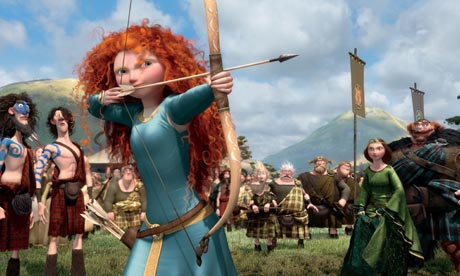
Jennifer Lawrence wasn't the only ballsy princess of 2012. We also had the flame-haired, cinch-waisted Princess Merida in Pixar's Brave, the studio's first female protagonist; plus Kristin Stewart riding, fighting, and shooting her way through Snow White and the Huntsman, not to mention her swan song for beloved Bella, now a momma grizzly protecting her vampire cub in the last Twilight movie. They all added up to "an interesting new breed of warrior princesses," said the New York Times' AO Scott, "whose ascendance reflects the convergence of commercial calculations and cultural longings."
Much of the credit must go to Lionsgate, who released both Breaking Dawn Part 2 and The Hunger Games, thus proving conclusively that young female actresses can 'open' and power a movie move way past the $100 million mark. "Girls actually need superheroes much more than boys," said Gloria Steinem, approvingly. Boys aren't the only ones to play Han Solo.
brave film still by pixar Princess Merida – and her bow and arrow – were big hits in 2012. Photograph: Pixar

Wednesday, April 25, 2012

HISTORY OF WT's Impact on UK Film Biz

An Assessment of the Work of Working Title and It’s Effect On The British Film Industry

Working Title films was founded in 1984 by Sarah Radclyffe (Who would later leave the company to be replaced by Eric Fellner in 1992) and Tim Bevan. The company’s first notable success was the 1985 film My Beautiful Laundrette, a story of a young Asian man’s battle to ‘make it’ in London during the Thatcher years. The film stars Saeed Jaffrey and features a breakthrough performance by Daniel Day Lewis and was both a critical and commercial success for the fledgling studio, picking up two BAFTA nominations, and an academy award nomination for best screenplay. The success of My Beautiful Laundrette enabled Working Title to establish themselves as a serious production company and attract the attention of backers Polygram in 1992, and also the attention of the major American studios who were interested in distributing Working Title’s projects internationally. 

Sunday, September 25, 2011

How success of film Bridesmaids brought change to US TV

A long article with good detail about the current wave of female-led comedies on US TV which are pushing boundaries and causing a real outcry, not least for their wisecracking leads playing such countertypes and transgressing the gender boundary with much risque, traditionally male, humour.
Could this simply be the 'ladette' phenomenon again though?
All this has come about after Hollywood executives noted the ability of Bridesmaids, a seeming chick-flick comedy, to attract a large male audience to cinemas. ... A useful point to consider when addressing your coursework's target audience.


Female comics take over US sitcoms following success of Bridesmaids

American TV executives wake up to fact that wisecracking women don't need male foils to be funny

24.9.11

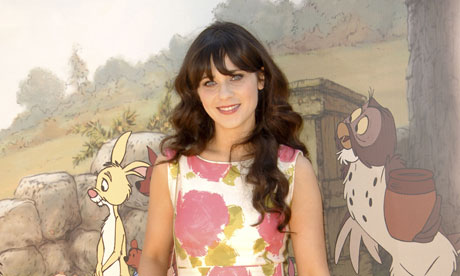
    zooey deschanel
    Female comedians and actors such as Zooey Deschanel are leading the new wave of US sitcoms

    Something strange is afoot in the world of the American sitcom. A breed of character has emerged that curses profanely, talks frankly about sex, sleeps around and drinks too much, all while wisecracking rudely with the best of them.
    None of those attributes is especially original, except that these characters are all women. A fresh crop of TV comedy shows has hit the US cultural landscape anchored on a new breed of sassy, independent, freethinking woman.
    Building on the success of the hit Hollywood movie Bridesmaids, which seemed to convince movie executives that male cinemagoers would pay to see funny women, America's television channels are now also placing a big bet on a feminine twist to some tried and tested comic set-ups.
    They have even raided the worlds of independent cinema and cutting-edge stand-up to get their talent. First up is New Girl, which stars indie darling Zooey Deschanel in her own show about a woman called Jess who moves in with three men. Though it is an ensemble cast, the show is firmly centred on Deschanel as its main draw. Next is 2 Broke Girls, which features another star of the independent scene, Kat Dennings. She plays Max, a gritty waitress with a strong line in witty put-downs that have stretched what is previously tolerated on mainstream TV. In the first show – on the CBS network no less – Dennings's Max responds angrily to a restaurant customer who clicks his fingers at her to get her to come to his table. "You think this is the sound that gets you service," she says, clicking her fingers right back. "I think this is the sound that dries up my vagina." That line alone inspired a wave of hand-wringing articles in America wondering about current broadcasting standards.
    Finally, there is Whitney, a show that stars Whitney Cummings, a rising stand-up comedian who has drawn rave reviews for her comic routines. Now she has been given her own TV show. The format is standard – it explores Whitney's life as she lives with (and refuses to marry) her boyfriend – but network executives have been promising the show will not pull its punches in dealing frankly with sex and relationships. "This has been coming for a while. A lot depends on these shows. If people respond well to them, then that is all we are going to see. If not, then we'll have to wait another five years to try again," said Janette Barber, a stand-up comic turned radio host on SiriusXM satellite radio.
    Of course, there is a long tradition of sassy, funny women in US television comedy. From almost the very start of the genre, major female stars emerged, like Lucille Ball in the classic 1950s show I Love Lucy. In the 70s Bea Arthur starred in Maude as an outspoken liberal, while Loretta Swit was nominated for 10 Emmys during 11 years in M*A*S*H. In the late 80s Roseanne Barr, as the lead character in Roseanne took a wisecracking female lead character to new heights. However, those series nearly always placed their female comics in the role of a wife or mother. With a few notable exceptions – such as the TV news comedy show Murphy Brown – they were set against a husband or with a family.
    That phenomenon reached its apogee with a wave of comedy shows in the 2000s which seemed to make a fetish of placing attractive, intelligent and witty women in roles where they played second fiddle to often overweight and not especially clever husbands. Shows like The King of Queens, Everybody Loves Raymond and According to Jim were enormously successful using this formula. "We were seeing a lot of this. The pretty, attractive woman who lives with a schlubby guy. Why did these women marry these guys? They are brighter and more intelligent and more funny than their husbands, who clearly often infuriate them," said Professor Robert Thompson, a pop culture expert at Syracuse University.
    The new TV comedies are helping to end that. Here the women characters are not defined by men, even as they fulfil some of the cliches of the sitcom genre: by getting dumped, or trying to bring spice back into a relationship or going on a first date. They put the woman character first and are building on a number of recent female successes, especially Tina Fey's award-winning role in 30 Rock and to a lesser extent the Amy Poehler-led comedy Parks & Recreation.
    But the largest influence is the runaway critical and commercial success of Bridesmaids, which starred and was co-written by Kristen Wiig. That movie blew away the critics with its focus on female friendships and, far more importantly in the minds of entertainment executives, it cashed in at the box office in spectacular style. It notched up a staggering $283m in ticket sales, on a budget of just $32m: a paper profit of almost a quarter of a billion. No wonder a host of follow-up films, such as the upcoming Bachelorette, are now in the works. And no surprise that America's TV executives hope to cash in with their female-centric shows. "New things don't happen on TV. They happen somewhere else and TV gloms on to them. The audience for Bridesmaids had a lot of purchasing power and they want a piece of that," said Barber.
    That clear-eyed focus on the bottom line is gradually shaking up US television's natural conservatism when it comes to recognising social change. After all, American life is filled with several generations of independent, working (funny) women unconstrained by their men. But TV, many experts say, has a history of being slow to catch up with the society it claims to reflect. Thompson points to the success of the 1960s comedy show Gomer Pyle U.S.M.C. Despite being set on a marines base during the brutal height of the Vietnam war, the show never once mentioned the conflict. Instead it focused on the daily tribulations of its main character, a former petrol station attendant who had signed on in the military. Or look at the furore surrounding the coming out of Ellen DeGeneres as a lesbian on her sitcom Ellen in 1997. Though it became a momentous event in TV history, gay people in actual public life in America were already prominent and had long won numerous civil rights and social acceptance. But with these new shows it is possible that the medium is at last catching up with the reality of everyday life. "We are finally at the point when TV is not so many steps behind. Soon it might even sometimes be a few steps ahead," said Thompson.
    However, there is still a way to go when it comes to the treatment of women in comedy. It has long been a male-dominated world. "I'm saddened that we are still talking about women in comedy as if it were an oddity. When I first started doing stand-up in the 80s, I was usually introduced: 'And here's something different – a female comic!'," said Judy Carter, a comedian turned motivational speaker. Despite the wave of new women-led shows, there still does seem to be a double standard when it comes to female comics. They are not entirely judged on the quality of their jokes, but also on their gender, in a way male comics are not. Perhaps the new shows will help change that. To do so they will have to be successful in terms of ratings, thus generating the required advertising revenue to make them a standard part of the broadcasting ecosystem. The early signs are good.
    New Girl's debut scored some 10.1 million viewers and was the most popular show of its night among younger viewers. Meanwhile, 2 Broke Girls got a huge 19.2 million viewers for its heavily promoted first show. If such performances are kept up, the shows might cease to be viewed as sitcoms featuring funny women and just seen as funny TV shows. "I look forward to the day when we laugh at a movie such as Bridesmaids, and we don't even notice: 'Oh my God, women are funny!' Funny is funny regardless of gender," said Carter.

Monday, June 13, 2011

Her Body, Himself: Gender in the Slasher Film

The following is taken from http://publishing.cdlib.org/ucpressebooks/view?docId=ft809nb586&chunk.id=d0e4943&toc.depth=1&toc.id=d0e4713&brand=ucpress
You can find further chapters and sections there on feminism, representation etc

Her Body, Himself: Gender in the Slasher Film

next sub-section

The Slasher Film

The immediate ancestor of the slasher film is Hitchcock's Psycho (1960). Its elements are familiar: the killer is the psychotic product of a sick family, but still recognizably human; the victim is a beautiful, sexually active woman; the location is not-home, at a Terrible Place; the weapon is something other than a gun; the attack is registered from the victim's point of view and comes with shocking suddenness. None of these features is original, but the unprecedented success of Hitchcock's particular formulation, above all the sexualization of both motive and action, prompted a flood of imitations and variations. In 1974, a film emerged that revised the Psycho template to a degree and in such a way as to mark a new phase: The Texas Chain Saw Massacre (Tobe Hooper). Together with Halloween (John Carpenter, 1978), it engendered a new spate of variations and imitations.
The plot of Texas Chain Saw is simple enough: five young people are driving through Texas in a van; they stop off at an abandoned house and are murdered one by one by the psychotic sons of a degenerate local family; the sole survivor is a woman. The horror, of course, lies in the elaboration. Early in the film the group picks up a hitchhiker, but when he starts a fire and slashes Franklin's arm (having already slit open his own hand), they kick him out. The abandoned house they subsequently visit, once the home of Sally's and Franklin's grandparents, turns out to be right next door to the house of the hitchhiker and his family: his brother Leatherface; their father; an aged and only marginally alive grandfather; and their dead grandmother and her dog, whose mummified corpses are ceremonially included in the family gatherings. Three generations of slaughterhouse

193
workers, once proud of their craft but now displaced by machines, have taken up killing and cannibalism as a way of life. Their house is grotesquely decorated with human and animal remains—bones, feathers, hair, skins. The young people drift apart in their exploration of the abandoned house and grounds and are picked off one by one by Leatherface and Hitchhiker. Last is Sally.

Sunday, June 12, 2011

Roseanne on class prejudice/sexism of TV

I made the mistake of thinking Marcy was a powerful woman in her own right. I've come to learn that there are none in TV. There aren't powerful men, for that matter, either – unless they work for an ad company or a market-study group. Those are the people who decide what gets on the air and what doesn't.
Complaining about the "created by" credit made an enemy of Matt. He wasted no time undermining me, going so far as to ask my co-star, John Goodman, who played Roseanne Conner's husband, Dan, if he would do the show without me. (Goodman said no.) It was then that I had my first nervous breakdown. [excerpt]

I'll cross-post this on several blogs as it touches on gender, regulation, class prejudice and the general financial machinations of the entertainment business. Assuming you're unaware of what 'Roseanne' is, a few clicks on wikipedia or youtube will swiftly bring you up to speed - it was a hugely successful US sitcome with the USP of centring on a working-class family (with money problems and lousy jobs, not the usual facsimille of working class, or 'labour as Roseanne Barr refers to it, with a tough domestically inept/disinterested woman at the head of the family).

There are very, very few comparisons - aspects of Taxi perhaps, maybe even Married With Children.
Her article, and forthcoming book, reveal just how unprepared the US TV network (whose working practices, being fundamentally driven by financial calculations and audience testing, are not so different to those of the film biz) was to let an unvarnished depiction of working class folk go on, let alone allow a female creative lead the way. Roseanne Barr found that her own creation was credited to an entirely uninvolved male producer, who went on to make her life hell.

There may be a 'PC' moral behind this, but it is a fascinating read from a very un-PC lady.


Roseanne Barr: 'Fame's a bitch. It's hard to handle and drives you nuts'

With a hit TV show, Roseanne Barr could get the best tables in the best restaurants. Never mind about the empty flattery, the nervous breakdowns and the feeling of being used for 10 years. But she's not bitter. Honest
Roseanne Barr 11.6.11 http://www.guardian.co.uk/culture/2011/jun/11/roseanne-barr-on-fame
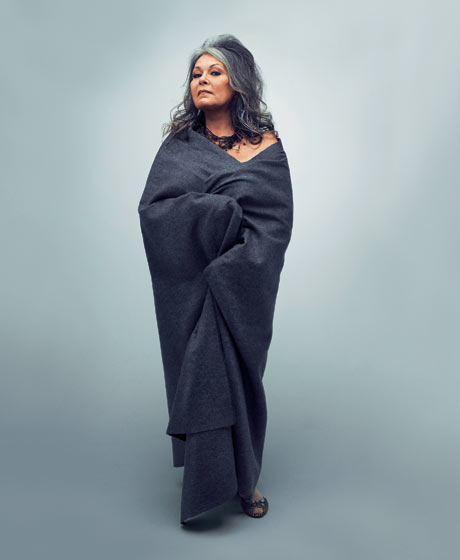
    Roseanne Barr
    'I walked into the producer's office, held up a pair of wardrobe scissors to show her I meant business - "This is no character! This is my show. You watch me. I will win this battle." ' Photograph: Robert Maxwell/Art + Commerce
    During the recent and overly publicised breakdown of Charlie Sheen, I was repeatedly contacted by the media and asked to comment, as it was assumed that I know a thing or two about starring on a sitcom, fighting with producers, nasty divorces, public meltdowns and bombing through a live comedy tour. I have, however, never smoked crack or taken too many drugs, unless you count alcohol as a drug (I don't). But I do know what it's like to be seized by bipolar thoughts that make one spout wise about tiger blood and brag about winning when one is actually losing. It's hard to tell whether one is winning or, in fact, losing once one starts to think of oneself as a commodity, or a product, or a character, or a voice for the downtrodden. It's called losing perspective. Fame's a bitch. It's hard to handle and drives you nuts. Yes, it's true that your sense of entitlement grows exponentially with every perk until it becomes too stupendous a weight to walk around under, but it's a cut-throat business, show, and without the p