Showing posts with label TV. Show all posts

Friday, September 22, 2017

FRANCHISE Universal rev up £25m Fast Furious live show

Guardian feature
Disney are the kings of brand extension, with Disneyland a big business in its right and the Pirates of... franchise a neat reversal in being a movie spin-off from a Disneyland feature.

Universal are staking a claim as the barons of franchise extension though, with their own theme parks, multiple TV adaptations of movies (eg About a Boy by WTTV), theatrical adaptations (notably Billy Elliot, a big hit, and Bridget Jones, both spun off from Working Title productions).

Tuesday, August 08, 2017

STREAMING Disney quit Netflix for own service. Fragmentation?

Disney now offering streaming TV.

Apple will have to join this suddenly crowded market, with Netflix, Hulu, Amazon and more facing increasing competition.

If more of the big six follow suit, surely that will actually undermine the paid-for streaming industry and encourage a resurgence in piracy?
Not in Lux. yet, but a fullscale streaming option is being rolled out.

Wednesday, July 12, 2017

WARP Meadows C4 Virtues continues the TV convergence

Shane Meadows’ latest drama series for Britain’s Channel 4 will see the filmmaker reuniting with “This Is England” stars Stephen Graham and Helen Behan for “The Virtues.” The show will follow Joseph, played by Graham, as he returns home to Ireland to confront a troubled past after having been brought up in the state care system. 
Frank Laverty (“Michael Collins”) will star as the husband of Anna (Behan), the sister whom Joseph has not seen since he was a child. Jack Thorne, who worked on the “This Is England” TV series, has written “The Virtues.” The show will be produced by Sheffield- and London-based Warp Films, which made the 2009 film “This Is England” and three TV sequels: “This Is England ’86,” “This Is England ’88,” and “This Is England ’90.” Like all of the “England” TV series, “The Virtues” will be four parts. 
Meadows said that “The Virtues” will draw on his previous work. “It takes the biblical, almost apocalyptic levels of revenge witnessed in ‘Dead Man’s Shoes,’ along with the bittersweet humor from ‘This Is England,’ and creates a landscape like nothing else I’ve worked on,” he said. 
“The Virtues” is shooting in Sheffield, Liverpool, and Belfast, and will bow on Channel 4 in 2019.FILED UNDER:
Shane MeadowsStephen GrahamThe VirtuesThis is England

Thursday, February 16, 2017

CONVERGENCE Love Actually mini-sequel for TV

What joy - a sequel to the wonderful Love Actually, the profound Richard Curtis classic that puts would-be auteurs like Welles, Hitchcock, Scorsese et al to shame.


Tragically, there will be only ten minutes of this cinematic feast, delivered through TV, as part of the Comic Relief telethon that Curtis helped create. One can only hope for a fourth Bridget Jones movie to ease the pain.

Thanks to Richard for alerting me to this televisual splendour, a nice example of convergence, with the TV/film divide fading - About a Boy being another Working Title example.

LA itself has become a meme since its release; as this article notes, comparisons have been made between the Grant character and Canadian PM Trudeau this week.
A notoriously polarising film, Love Actually’s cultural currency has grown in the 14 years since it was released. The film has been repeatedly unpicked, spoofed and deconstructed; four foreign language films – in Japanese, Hindi, Polish and Dutch – have also been inspired by the movie.
The showdown between Hugh Grant’s upstanding UK prime minister and the boorish, lecherous US president – reportedly based on a Bill Clinton/George W Bush hybrid – has been a touchstone of political discourse ever since. Even this week, Canadian premier Justin Trudeau found himself compared to Grant, following his meeting with US President Donald Trump. 
...


Wednesday, November 30, 2016

BFI looks beyond cinema

As well as announcing a large scale digitisation of British TV, the BFI also announced a change in its funding programme to include films not intended for theatrical release.
“The BFI’s job is to champion the future success of film in the UK and this plan is designed to do that – we want to back the brave, the new and the experimental.
“Our aim is to find, educate and support the very best talent, give them the skills, tools and creative freedom needed to tell their stories, and make sure as many people as possible can enjoy and be inspired by those stories on the big screen, the small screen and even the screen in their pocket.”

Tuesday, March 15, 2016

ROM-COM no more love for the classic hybrid?


I've read a variety of articles over the past decade announcing the death of the rom-com after some genre flick flopped (often starring Jennifer Aniston!).

Here's another ... which goes a step further in pronouncing a range of genres as dead and box office buried, but also argues that TV is now the true home of the rom-com, an intriguing point in this era of digitisation and convergence:

Wednesday, May 20, 2015

CONVERGENCE Working Title TV

IN THIS POST: This links into several posts on convergence and ownership issues, and explores just how converged a company WT really is ... and the influence of ownership on this. I briefly raise points discussed in detail in previous posts.

Screenshot of the Wiki.

WHAT THIS WIKI SCREENSHOT TELLS US...
Great academic research, eh?!
This tells us three key things before we consider more recent developments:

Tuesday, May 05, 2015

DIGITISATION, GLOBALISATION, CONVERGENCE Superhero hegemony in brief

Another critic (Jason Wilson) rather irked at the hegemony of superhero tentpoles. If you use the superhero tag in particular you'll find several linked articles analysing the rise of these films and this me-too strategy.

A quick summary follows of key points you can utilise to show your understanding of how (British and global) cinema functions ...

Thursday, April 16, 2015

CONVERGENCE All the world's a Marvellous stage/silver screen

See Marvel section below for analysis; image source.
Age Of Ultron marks Whedon’s swan song in the Avengers director chair but it’s hardly the end of the saga. The two-part Infinity War story has been set in stone for 2018 and 2019, along with eight other Marvel titles. DC, looking to get its comic-book universe up and running, has also announced a hefty release schedule. In tandem with a fresh batch of X-Men sequels, Spider-man spin-offs and Fantastic Four reboots, that’s at least 25 new superhero movies over the next five years.  - Bernstein, 2015See later sections below for analysis of the Marvel universe, UGC, web 2.0 and extended narratives...

I'll add to this shortly [done!]; having blogged on convergence (TV-film) this morning, this caught my eye, and made me think of theatrical adaptations of Bridget Jones, Billy Elliot and such. This can go the other way - West Side Story being an early example, Les Miserables  a more recent (Working Title) example. WT have a long track record of exploiting IP (intellectual property), especially novels, for adaptation (Atonement, BJD...).
Do you believe in fairies? Does Harvey Weinstein?
The famously fractious producer has spent millions of dollars and run through a couple of casts and creative teams in a diehard attempt to transform the 2004 Miramax film Finding Neverland into a Broadway show. - Soloski (2015) - Finding Neverland review – Gary Barlow's dull songs sink muddled show.
Once more, if we consider Working Title and Warp, we can see how a process evangelised by some (take a bow Dan Gillmor, or Chris 'long tail theory' Anderson) as democratising, levelling the playing field, actually seems to favour the conglomerates (...take a bow Andrew Keen, John McMuria, maybe even Anita 'blockbuster [ie tentpole] strategy' Elberse)!

CONVERGENCE Toronto (TIFF) to add TV

See previous post for more, including analysis of how Kickstarter fits with this topic. There are further posts on convergence, including this detailed guide to convergence + digitisation.
“Film and television have been converging for years, with many filmmakers gravitating to television to experiment with that medium,” said Cameron Bailey, artistic director of the festival. “Primetime will highlight these developments internationally, spotlighting the growing intersection between these two moving-image cultures and industries.”

As well as previous posts specifically on this topic, there is much more on convergence to be found on this blog!
The blurring of the line between TV and film has been increasingly evident: Shane Meadows following up This is England with two (soon to be three) C4 series, and Fargo one of many films adapted for TV series (Conal was yesterday recommending Daredevil, a fairly atrocious movie transformed into a critically acclaimed series). 

Sunday, September 25, 2011

How success of film Bridesmaids brought change to US TV

A long article with good detail about the current wave of female-led comedies on US TV which are pushing boundaries and causing a real outcry, not least for their wisecracking leads playing such countertypes and transgressing the gender boundary with much risque, traditionally male, humour.
Could this simply be the 'ladette' phenomenon again though?
All this has come about after Hollywood executives noted the ability of Bridesmaids, a seeming chick-flick comedy, to attract a large male audience to cinemas. ... A useful point to consider when addressing your coursework's target audience.


Female comics take over US sitcoms following success of Bridesmaids

American TV executives wake up to fact that wisecracking women don't need male foils to be funny

24.9.11

    zooey deschanel
    Female comedians and actors such as Zooey Deschanel are leading the new wave of US sitcoms

    Something strange is afoot in the world of the American sitcom. A breed of character has emerged that curses profanely, talks frankly about sex, sleeps around and drinks too much, all while wisecracking rudely with the best of them.
    None of those attributes is especially original, except that these characters are all women. A fresh crop of TV comedy shows has hit the US cultural landscape anchored on a new breed of sassy, independent, freethinking woman.
    Building on the success of the hit Hollywood movie Bridesmaids, which seemed to convince movie executives that male cinemagoers would pay to see funny women, America's television channels are now also placing a big bet on a feminine twist to some tried and tested comic set-ups.
    They have even raided the worlds of independent cinema and cutting-edge stand-up to get their talent. First up is New Girl, which stars indie darling Zooey Deschanel in her own show about a woman called Jess who moves in with three men. Though it is an ensemble cast, the show is firmly centred on Deschanel as its main draw. Next is 2 Broke Girls, which features another star of the independent scene, Kat Dennings. She plays Max, a gritty waitress with a strong line in witty put-downs that have stretched what is previously tolerated on mainstream TV. In the first show – on the CBS network no less – Dennings's Max responds angrily to a restaurant customer who clicks his fingers at her to get her to come to his table. "You think this is the sound that gets you service," she says, clicking her fingers right back. "I think this is the sound that dries up my vagina." That line alone inspired a wave of hand-wringing articles in America wondering about current broadcasting standards.
    Finally, there is Whitney, a show that stars Whitney Cummings, a rising stand-up comedian who has drawn rave reviews for her comic routines. Now she has been given her own TV show. The format is standard – it explores Whitney's life as she lives with (and refuses to marry) her boyfriend – but network executives have been promising the show will not pull its punches in dealing frankly with sex and relationships. "This has been coming for a while. A lot depends on these shows. If people respond well to them, then that is all we are going to see. If not, then we'll have to wait another five years to try again," said Janette Barber, a stand-up comic turned radio host on SiriusXM satellite radio.
    Of course, there is a long tradition of sassy, funny women in US television comedy. From almost the very start of the genre, major female stars emerged, like Lucille Ball in the classic 1950s show I Love Lucy. In the 70s Bea Arthur starred in Maude as an outspoken liberal, while Loretta Swit was nominated for 10 Emmys during 11 years in M*A*S*H. In the late 80s Roseanne Barr, as the lead character in Roseanne took a wisecracking female lead character to new heights. However, those series nearly always placed their female comics in the role of a wife or mother. With a few notable exceptions – such as the TV news comedy show Murphy Brown – they were set against a husband or with a family.
    That phenomenon reached its apogee with a wave of comedy shows in the 2000s which seemed to make a fetish of placing attractive, intelligent and witty women in roles where they played second fiddle to often overweight and not especially clever husbands. Shows like The King of Queens, Everybody Loves Raymond and According to Jim were enormously successful using this formula. "We were seeing a lot of this. The pretty, attractive woman who lives with a schlubby guy. Why did these women marry these guys? They are brighter and more intelligent and more funny than their husbands, who clearly often infuriate them," said Professor Robert Thompson, a pop culture expert at Syracuse University.
    The new TV comedies are helping to end that. Here the women characters are not defined by men, even as they fulfil some of the cliches of the sitcom genre: by getting dumped, or trying to bring spice back into a relationship or going on a first date. They put the woman character first and are building on a number of recent female successes, especially Tina Fey's award-winning role in 30 Rock and to a lesser extent the Amy Poehler-led comedy Parks & Recreation.
    But the largest influence is the runaway critical and commercial success of Bridesmaids, which starred and was co-written by Kristen Wiig. That movie blew away the critics with its focus on female friendships and, far more importantly in the minds of entertainment executives, it cashed in at the box office in spectacular style. It notched up a staggering $283m in ticket sales, on a budget of just $32m: a paper profit of almost a quarter of a billion. No wonder a host of follow-up films, such as the upcoming Bachelorette, are now in the works. And no surprise that America's TV executives hope to cash in with their female-centric shows. "New things don't happen on TV. They happen somewhere else and TV gloms on to them. The audience for Bridesmaids had a lot of purchasing power and they want a piece of that," said Barber.
    That clear-eyed focus on the bottom line is gradually shaking up US television's natural conservatism when it comes to recognising social change. After all, American life is filled with several generations of independent, working (funny) women unconstrained by their men. But TV, many experts say, has a history of being slow to catch up with the society it claims to reflect. Thompson points to the success of the 1960s comedy show Gomer Pyle U.S.M.C. Despite being set on a marines base during the brutal height of the Vietnam war, the show never once mentioned the conflict. Instead it focused on the daily tribulations of its main character, a former petrol station attendant who had signed on in the military. Or look at the furore surrounding the coming out of Ellen DeGeneres as a lesbian on her sitcom Ellen in 1997. Though it became a momentous event in TV history, gay people in actual public life in America were already prominent and had long won numerous civil rights and social acceptance. But with these new shows it is possible that the medium is at last catching up with the reality of everyday life. "We are finally at the point when TV is not so many steps behind. Soon it might even sometimes be a few steps ahead," said Thompson.
    However, there is still a way to go when it comes to the treatment of women in comedy. It has long been a male-dominated world. "I'm saddened that we are still talking about women in comedy as if it were an oddity. When I first started doing stand-up in the 80s, I was usually introduced: 'And here's something different – a female comic!'," said Judy Carter, a comedian turned motivational speaker. Despite the wave of new women-led shows, there still does seem to be a double standard when it comes to female comics. They are not entirely judged on the quality of their jokes, but also on their gender, in a way male comics are not. Perhaps the new shows will help change that. To do so they will have to be successful in terms of ratings, thus generating the required advertising revenue to make them a standard part of the broadcasting ecosystem. The early signs are good.
    New Girl's debut scored some 10.1 million viewers and was the most popular show of its night among younger viewers. Meanwhile, 2 Broke Girls got a huge 19.2 million viewers for its heavily promoted first show. If such performances are kept up, the shows might cease to be viewed as sitcoms featuring funny women and just seen as funny TV shows. "I look forward to the day when we laugh at a movie such as Bridesmaids, and we don't even notice: 'Oh my God, women are funny!' Funny is funny regardless of gender," said Carter.

Sunday, June 12, 2011

Roseanne on class prejudice/sexism of TV

I made the mistake of thinking Marcy was a powerful woman in her own right. I've come to learn that there are none in TV. There aren't powerful men, for that matter, either – unless they work for an ad company or a market-study group. Those are the people who decide what gets on the air and what doesn't.
Complaining about the "created by" credit made an enemy of Matt. He wasted no time undermining me, going so far as to ask my co-star, John Goodman, who played Roseanne Conner's husband, Dan, if he would do the show without me. (Goodman said no.) It was then that I had my first nervous breakdown. [excerpt]

I'll cross-post this on several blogs as it touches on gender, regulation, class prejudice and the general financial machinations of the entertainment business. Assuming you're unaware of what 'Roseanne' is, a few clicks on wikipedia or youtube will swiftly bring you up to speed - it was a hugely successful US sitcome with the USP of centring on a working-class family (with money problems and lousy jobs, not the usual facsimille of working class, or 'labour as Roseanne Barr refers to it, with a tough domestically inept/disinterested woman at the head of the family).

There are very, very few comparisons - aspects of Taxi perhaps, maybe even Married With Children.
Her article, and forthcoming book, reveal just how unprepared the US TV network (whose working practices, being fundamentally driven by financial calculations and audience testing, are not so different to those of the film biz) was to let an unvarnished depiction of working class folk go on, let alone allow a female creative lead the way. Roseanne Barr found that her own creation was credited to an entirely uninvolved male producer, who went on to make her life hell.

There may be a 'PC' moral behind this, but it is a fascinating read from a very un-PC lady.


Roseanne Barr: 'Fame's a bitch. It's hard to handle and drives you nuts'

With a hit TV show, Roseanne Barr could get the best tables in the best restaurants. Never mind about the empty flattery, the nervous breakdowns and the feeling of being used for 10 years. But she's not bitter. Honest
Roseanne Barr 11.6.11 http://www.guardian.co.uk/culture/2011/jun/11/roseanne-barr-on-fame
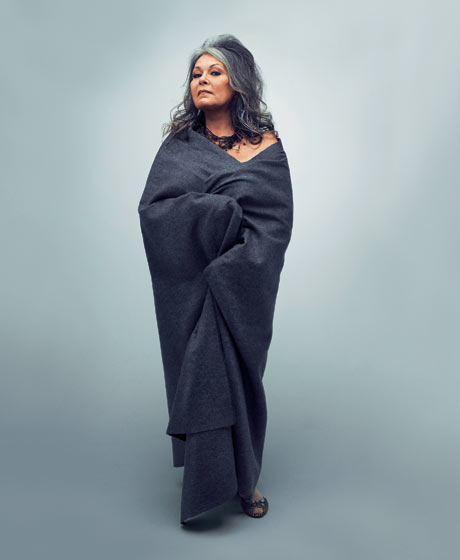
    Roseanne Barr
    'I walked into the producer's office, held up a pair of wardrobe scissors to show her I meant business - "This is no character! This is my show. You watch me. I will win this battle." ' Photograph: Robert Maxwell/Art + Commerce
    During the recent and overly publicised breakdown of Charlie Sheen, I was repeatedly contacted by the media and asked to comment, as it was assumed that I know a thing or two about starring on a sitcom, fighting with producers, nasty divorces, public meltdowns and bombing through a live comedy tour. I have, however, never smoked crack or taken too many drugs, unless you count alcohol as a drug (I don't). But I do know what it's like to be seized by bipolar thoughts that make one spout wise about tiger blood and brag about winning when one is actually losing. It's hard to tell whether one is winning or, in fact, losing once one starts to think of oneself as a commodity, or a product, or a character, or a voice for the downtrodden. It's called losing perspective. Fame's a bitch. It's hard to handle and drives you nuts. Yes, it's true that your sense of entitlement grows exponentially with every perk until it becomes too stupendous a weight to walk around under, but it's a cut-throat business, show, and without the p