Thursday, February 21, 2013

Sky's the Limit? 4 of big 6 on exclusive deals

The headline of the story I got this info from centres on Disney (Sky Movies Disney: new channel to show UK TV film premieres, Jason Deans, 21.2.13), but the bigger story is that Sky, a News Corp (Murdoch's global conglomerate) subsidiary, has now got 4 of the big 6* signed up to exclusive deals.

*Yes, this may in time switch to the 'big 7' with Lionsgate joining the party, but for now lets stick to the 6!

I knew someone would have thought of this!
Thats a very big deal so far as UK exhibition goes, giving Sky a virtual stranglehold over TV rights - precisely the sort of monopoly that the ultra-free market Murdoch claims to be against (we explore such economic issues more in A2 when looking at media regulation). Given the multiple ways you can access a Sky subscription, including on iPads, its also typically clever if cut-throat business practice from Murdoch, reflecting a similar approach to football: Sky built up its subscriber base by monopolising Premership football coverage and taking it off free-to-air PSB networks (BBC, ITV, C4, C5). He's successfully seen off challenges from ITV Digital in the past (illegally leaking the hack code for its subscriber cards according to a 2012 documentary), and is now faced with potentially stiff competition from streaming services such as Netflix.
The deal also gives Sky access to Disney films for its video on demand services Sky Go, Now TV and On Demand.
Sky declined to reveal the length of its new Disney deal. But in the face of increased competition for Hollywood movie rights from US VOD service Netflix, which launched in the UK in early 2012, Sky has now renewed exclusive pay-TV deals with four out of the six major studios – Disney, Sony, Universal and Warner Bros – since September.
The deal includes Disney's newly-acquired subsidiary Lucasfilms, which means Sky have exclusive pay-TV rights to the upcoming Star Wars sequels.

Its also an illustration of how the majors retain and reinforce their dominance; the likes of Warp aren't likely to be invited to negotiations for an exclusive deal with Sky any time soon!
Although Working Title is effectively an NBC-Universal subsidiary, it is not included in the deal, meaning they still have to negotiate film-by-film distribution and exhibition deals.

Friday, January 18, 2013

TOWID (The Only Way Is Digital)

2013 is clearly set to see digitisation continue apace, with analogue media being displaced by digital media which are typically cheaper to produce and distribute. That doesn't mean that analogue media, such as films shot on 35mm and distributed as 35mm prints to cinemas (each print costing £000s), will disappear, but that bit by bit the industry is moving over to digital content.
Here's some useful stats from this article, about Google buying a 10%, $50m stake in the video distributor Vevo (the joint Sony/Universal venture that you'll have come across if you've watched a few videos on YouTube, given how much of the music industry their artist sales represent):
Earlier this month the Entertainment Retailers Association reported that downloads of music, TV shows, films and video games topped £1bn in the UK for the first time in 2012. Digital music sales grew but revenue from physical singles fell by 44% year on year and albums dropped 11%.
The cinema industry and CD sales remain strong but, like newspapers, which are also seeing circulation declining rapidly as more people access their news online, may not have a bright future. The record set by Skyfall, 2012's Bond movie, may never be beaten: it became the first movie to take in over £100m at the UK box office by the last week in December 2012 (it was already the biggest ever UK cinema hit, and topped $1bn worldwide).

Friday, January 11, 2013

Film/Ideology: Superman's global message

Great article here which amply demonstrates the deeper ramifications of popular culture; delves into the hegemonic connotations of fictional entities such as Superman, shortly to be the subject of yet another film, Man of Steel. Sample quote:
"He is the first global superhero," said Larry Tye, author of Superman: The High-Flying History of America's Most Enduring Hero.
Indeed, Superman's influence is so great that he is spearheading the growing academic study of comic heroes and their role in society. Such figures are seen as fulfilling the same societal function as the myths of ancient Greece or Rome. They are outlandish creatures doing battle for high ideals and teaching us moral lessons. "We need myths to teach us virtues. Eventually those virtues need to be embodied by a person. Mythology has always played that function," said Professor Harry Brod, a philosopher at the University of Northern Iowa.
Some have taken the point of the moral teachings of Superman stories further, seeing a powerful philosophical concept behind them. In his book Saunders devotes a chapter to Superman, in which he suggests that the character's immense popularity is a result of his embodiment of goodness. "In terms of 20th-century popular culture, he captures the notion of a Platonic ideal of the good. When Superman is done well, I am not embarrassed to call him a beautiful idea," Saunders said.
See SpiralGroove.com: Superman + the American Way
Other experts in how human cultures work go even further in their efforts to explain the extraordinary longevity of the Superman figure.
The 2006 film that made Superman into a Jesus Christ-like figure was perhaps closer to the core of Superman than any other depiction. Just take some of Superman's main attributes. He descends to Earth from a world far away up in the sky. His true father passes him advice as he walks among mere humans.
Read the full article below.

Saturday, January 05, 2013

Cinema in 2013 will be...

Lengthy feature, broken down into shorter themed sections, from the Gdn Film Blog (if you don't already follow it you should!) here on what 2013 will bring for the cinema industry: read the article here or (partially reproduced) below.  

Care to add your own predictions as a comment? Will the 3D boom continue or tail off? Will home cinema 3D once again undermine cinema? Will streaming overtake DVD sales as a source of revenue? Will the window between exclusive theatrical exhibition and DVD/TV/streaming continue to shrink? Will the US audience continue to shrink as a % of Hollywood revenues for its own films - and if so, will this lead to greater multi-ethnicity in the casting of leads, or a shift away from depicting American power (surely a key tool of US political hegemony)? Will digitisation open up greater opportunities for Indie producers ... or will the tentpole strategy (closely tied to franchising sequels, prequels and remakes/reimaginings) continue to maintain big 6 global dominance? Will YOU go to see any film in the cinema in 2013 - or turn increasingly to viewing film on tablets, laptops etc?

Brits in Spandex and girl power: movie trends that will keep us talking in 2013

Last year, Hollywood was flush with international cash and films starring Matthew McConaughey. What will this year hold?
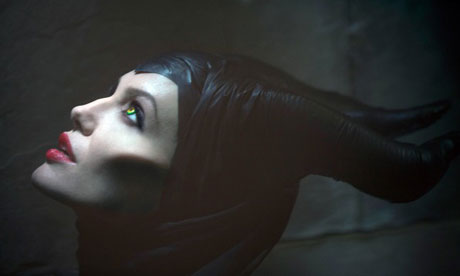
Angelina Jolie as Maleficent
Angelina Jolie as Maleficent represents the latest trend for Actresses of a Certain Age Who Aren't Really That Old: playing the bitch. Photograph: Disney

Time travel was popular. Prequels were hot. As were guns-for-hire, vampires and movies set on boats. Which of the year's cinematic trends, people, cultural avatars and epiphenomenon are most likely to set the agenda for 2013?

Jennifer Lawrence

In X-Men First-Class, Jennifer Lawrence wore the lightly stunned look of someone suffering from an acute case of Newcomer Bends. But then she narrowed her eyes, strung her bow and fired The Hunger Games towards $686m: Lawrence's imperturbability was revealed as the genuine article. The scene in Silver Linings Playbook where she walks into de Niro's lair and has him eating out of her hand in under five minutes may just win her an Oscar at the tender age of 22. If that weren't reason enough for New York magazine to put her at the top her their "Celebrity Brunch League" – the lost of famous people they'd most like to have pancakes with – the editors listed a few more:
She complains about her fussy premiere clothes; she crashes into cars while looking for Honey Boo Boo. There was that time that her entire family went to Sleep No More in search of orgies … Jennifer Lawrence cannot be contained by your Movie Star Rules of Decorum; Jennifer Lawrence has too much to share.
We concur. She's like Liz Taylor without the alimony.

Girls

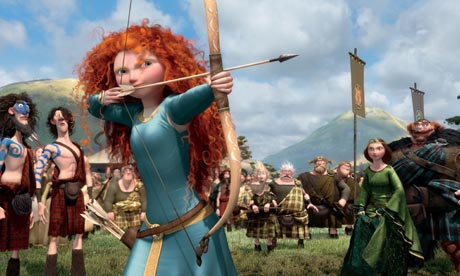
Jennifer Lawrence wasn't the only ballsy princess of 2012. We also had the flame-haired, cinch-waisted Princess Merida in Pixar's Brave, the studio's first female protagonist; plus Kristin Stewart riding, fighting, and shooting her way through Snow White and the Huntsman, not to mention her swan song for beloved Bella, now a momma grizzly protecting her vampire cub in the last Twilight movie. They all added up to "an interesting new breed of warrior princesses," said the New York Times' AO Scott, "whose ascendance reflects the convergence of commercial calculations and cultural longings."
Much of the credit must go to Lionsgate, who released both Breaking Dawn Part 2 and The Hunger Games, thus proving conclusively that young female actresses can 'open' and power a movie move way past the $100 million mark. "Girls actually need superheroes much more than boys," said Gloria Steinem, approvingly. Boys aren't the only ones to play Han Solo.
brave film still by pixar Princess Merida – and her bow and arrow – were big hits in 2012. Photograph: Pixar

Wednesday, October 03, 2012

Web-Only film: Microsoft's Halo 4

Cinemas have had to compete with TV, DVD, piracy and the increasing quality and affordability of home cinema setups. Now some film producers are ignoring cinema altogether and pioneering web-only releases for relatively high budget productions, with computing giant Microsoft's web-release of Halo 4 suggesting this could be a growing trend. Released as 5 15min episodes over a 5 week period (each launching once a week on YouTube), the budget is higher than for many films that will get cinema releases.
As the article notes, there have been several examples: 'Warner Brothers recently aired a web-only series based on Mortal Kombat, as did Ubisoft with Assassin's Creed, the latter currently being redeveloped as a film without a Hollywood studio. It is not only games, either. A new series of Arrested Development is under way for online distributor Netflix, as is a remake by David Fincher of the British series House of Cards.'
ARTICLE: http://www.guardian.co.uk/technology/2012/sep/30/halo-4-feature-film-online-web-game

Halo 4: the film of the game

A web-only film based on the Halo series (previewed below) is the start of something special
Halo 4, film, games
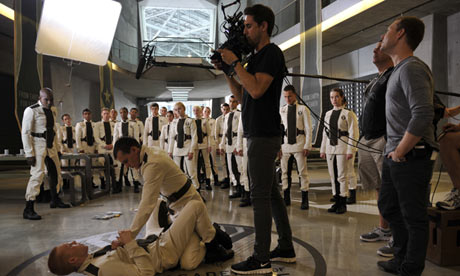
Filming of Halo 4: Forward Unto Dawn, which will air once a week on YouTube.
Given that both are such strong visual mediums, video games and films have endured a surprisingly fractious relationship. Yet it is one that neither seems willing to walk away from – the symbiotic allure at its heart is just too strong. The games industry brings ready-made scenarios, characters and a fanbase to movie producers, while exposure on the big screen feeds back into game sales.
Tempting, yes, but the relationship has been repeatedly tarnished, House of the Dead and Wing Commander being prime examples. Now, however, the very model of how film is made and distributed is being examined anew. In Microsoft's first foray into the market, it has chosen to debut its films based on the Halo games not at the cinema but in the form of a free-to-view online series that begins on Friday.

BFI replaces UKFC: 5 year plan announced

See below for full details (from this Guardian article), or go on to the BFI (British Film Institute) site (or the Wiki, or the Guardian's BFI microsite). Some key points:
  • BFI took on the UK Film Council's responsibilities in April 2011
  • by 2017 they'll be spending £24m a year on film production
  • that includes allocating the production finances which help many British films get made
  • they plan a 'BFiPlayer' for 2013, with 10,000 films to be digitised and made available by 2017
Here's a snippet of what they said about film production plans:
The BFI has also taken over responsibility for providing money for film production – The King's Speech, for example, benefited from £1m of lottery money.
In the five-year plan the money given out for production and development will rise annually to £24m by 2017 with "new opportunities for film-makers working in documentary and animation".
There is always lively debate about where money should be given, with David Cameron reported as saying it should be films that have wide commercial appeal.
The BFI's film fund head, Ben Roberts, said tough decisions had to be made. About 20 films a year will be funded, but another 300 will be turned down. But he said: "I don't believe commercial appeal and critical appeal can't co-exist. We can't underestimate how much audiences respond to strong, original film-making."
"The criteria for everybody is that we support film-makers with strong, original, inventive ideas," said Roberts. "It is up to us to have instincts about what we think is going to strike a chord with its audience."
He promised that the "doors are open to all kinds of film-makers" and that the process would be "very open and transparent".
.....

BFI to launch online player with 10,000 films from its archives

Player scheduled for end of 2013 with experts and public helping to choose which films will be digitised over next five years
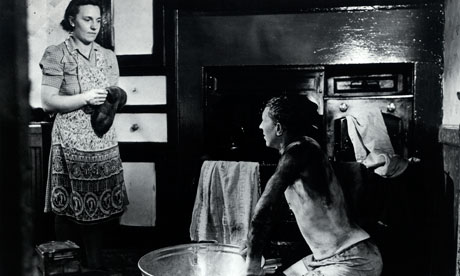
Still from the The Cumberland Story by Humphrey Jennings
The Cumberland Story by Humphrey Jennings (1945): the BFI's creative director says the online player will give the public access to films that have 'changed our understanding of our film culture'. Photograph: BFI
An internet "player", which will give unprecedented access to Britain's film heritage online, whether that's the innovations of the early pioneer RW Paul or the Mass Observation documentaries of Humphrey Jennings, was announced on Tuesday as part of a five-year plan for British film.
The British Film Institute, which has taken on a lead role for all aspects of film since the abolition of the UK Film Council outlined how it plans to spend over £500m over the next five years.

Tuesday, September 25, 2012

Film directors/studios turn to TV?

We've already seen many big name film directors produce and/or direct work for the small screen, not least Steven Spielberg and, recently, Martin Scorsese (with the excellent HBO series Boardwalk Empire). Now its the Coen brothers' turn, with an unexpected TV series of their early hit movie Fargo. Studio MGM has announced its intentions to use its back catalogue of films to spin off several new TV series over the coming years - see the article below for further details.

Coen brothers developing Fargo TV series

Joel and Ethan Coen to bring Oscar-winning film to the small screen, continuing the story of police chief Marge Gunderson
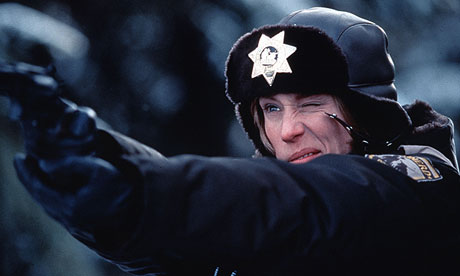
Frances McDormand in Fargo
Cohen crime caper … Frances McDormand as Marge Gunderson in Fargo. Photograph: Ronald Grant Archive
The Coen brothers are to bring their Oscar-winning film Fargo to the small screen, Deadline reports.
  1. Fargo
  2. Production year: 1996
  3. Country: USA
  4. Cert (UK): 18
  5. Runtime: 97 mins
  6. Directors: Ethan Coen, Joel Coen
  7. Cast: Frances MacDormand, Frances McDormand, Peter Stormare, Steve Buscemi, William H Macy, William H. Macy
  8. More on this film
Joel and Ethan Coen will oversee the TV series, which will be in the one-hour episode format, as executive producers. Fargo, which was released in 1996, marked an early foray for the siblings into Academy award-winning territory: the Coens won best original screenplay and Frances McDormand was named best actress for her role as pregnant police chief Marge Gunderson. The film was also nominated in a further five categories.
The Fargo TV show is part of studio MGM's plan to adapt properties it owns for the small screen through MGM Television. A previous attempt to produce a Fargo show took place in 2003, with The Sopranos' Edie Falco starring as Gunderson. It never got beyond a Kathy Bates-directed pilot, and did not have the blessing of the Coens.
In the Coens' original crime caper the taciturn Gunderson is charged with investigating a homicide after a local car dealer with money problems (William H Macy) hires two hapless goons (Steve Buscemi and Peter Stormare) to kidnap his wife as part of a ransom scam. The film is set mostly in North Dakota, which is populated largely by the descendants of Scandinavian and German settlers.
Gunderson is expected to once again be the main character in the TV series, which will be written and executive produced by Noah Hawley, creator of The Unusuals and My Generation.

Friday, August 24, 2012

Film4 Reimaginings: TisEng wins

Postmodern, comparable in some ways to sweding, an interesting reflection on the limitations of copyright and the importance of UGC for generating revenue for major film companies ... check out this story (with embedded clips): http://www.guardian.co.uk/film/2012/aug/24/this-is-england-film-4


(The key clip won't currently embed: http://www.youtube.com/watch?feature=player_embedded&v=knR2TupbHE4#!)

Wednesday, August 22, 2012

Hollywood encourages piracy?!

This is the claim of a well-argued article at http://www.scientificamerican.com/article.cfm?id=how-hollywood-encouraging-onine-piracy
Good + useful points on the inferior nature of download 'rental' (Netflix etc), all part of the digitisation debate

From a more conventional perspective, here's news of Google bowing to pressure from Hollywood and the music industry to effectively hide search results from certain download sites.

Wednesday, July 25, 2012

Co-Ops + Indie Cinemas in UK

The iPad isn't great for blogging, so at another time I'll develop a links list on this - a topic you need to be able to say something on for your exam, and to be able to claim to truly understand the business of British Cinema and how it interacts with the audience. Whilst the warehouse style and scale multiplexes have now long dominated UK cinemas, there are 1500 Indie cinemas, with 500 supported by the BFFS ('the British Federation of Film Societies (BFFS) which represents more than 500 community cinemas and film societies across the UK'). This article seems to be advertorial (it's not made entirely clear, but looks like it to me), but is useful to get a broader understanding of the diversity of exhibition beyond the multiplexes ... and the role, once more, of digitisation in fostering this change and enabling Indie exhibitors (as digital projection is less skilled and cheaper, and crucially financially supported by a UK Film Council fund - at least until that body was scrapped by the coalition government, a questionable decision on economic or cultural grounds): https://socialenterprise.guardian.co.uk/en/articles/social-enterprise-network/2012/jul/24/co-operative-cinema-opportunity

Tuesday, July 24, 2012

IMAX: The Future or a Con?

As I'm sure many of you did I went to see TDKRises on the NMMs IMAX screen, and enjoyed the visceral experience that the screen size and sound quality offers. 3D has been widely pointed to as the saviour of a cinema business under threat from two results of digitisation: cheap digital home cinema and piracy. Whether the public will continue to pay huge premiums for the questionable benefit of 3D is debatable. We've seen 3D rise before as a fad, back in the 1950s. IMAX nails one of the threats of digitisation though, offering a scale beyond he reach of home cinema.
Director Nolan insisted on shooting over 70mins of TDKRises in IMAX, an incredibly slow, thus expensive, production method, but several recent IMAX releases haven't been shot for IMAX, leading to a similar debate to that raging about digitally rendered 3D conversions of movies shot in 2D. There is even a LIEMAX campaign opposing inferior, potentially misleading IMAX screens.
Have a read through the article below, and some of the comments that follow, to get a grasp of this topic, a very useful case study to show your grasp of industry and consumption trends today. http://www.guardian.co.uk/film/filmblog/2012/jul/23/dark-knight-rises-imax

The Dark Knight Rises, and takes Imax with him
Christopher Nolan is singlehandedly transforming the prospects of the biggest picture show of all
Imax screening of The Dark Knight Rises
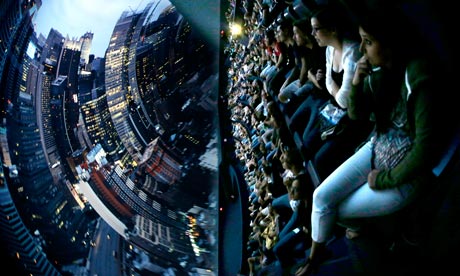
Truly immersive? ... an Imax screening of The Dark Knight Rises. Photograph: Julio Cortez/AP
It may be that the awful events at the Century 16 multiplex in Aurora, Colorado, will forever cast a shadow over cinema-going. Yet The Dark Knight Rises could also point the way to a brighter future for an increasingly troubled industry. It could help reshape the way we watch movies.
The film includes 72 minutes of footage shot on the Imax system, the most ever for a studio narrative feature. For director Christopher Nolan, that meant working with cumbersome, jitter-sensitive and noisy cameras capable of only three-minute takes and requiring 20 minutes to reload. Still, he's in no doubt that the extra effort was worth it. He believes he has secured in return "the best quality image that has ever been invented".
In an Imax ("image maximum") camera or projector, 70mm film runs sideways, taking up 15 sprocket holes per frame instead of 35mm's four. The resulting picture is 10 times larger with 10 times the resolution. Ideally, it's displayed at up to twice the usual brightness, on a curved screen that can be as tall as an eight-storey building. Together with 360-degree surround sound and stadium seating, it's supposed to provide the "most immersive motion picture entertainment" available.

Sunday, July 08, 2012

How Audience became Movie-Makers

How cinema audiences have become movie-makers The film industry used to have all the power over filmgoers. But home video and the internet have changed that relationship http://www.guardian.co.uk/film/2012/jul/05/how-cinema-audiences-became-movie-makers

Monday, May 28, 2012

Cinema-to-DVD release gap to narrow?

I've blogged on this before, back in 2010, but a major studio head has once more raised the prospect of whats currently a 17-week gap between (US) cinema release and DVD release narrowing significantly to combat piracy. Time Warner CEO Jeff Bewkes says the current system simply "create[s] a gap for piracy".
There's another growing trend just now: the widening of the key 'summer' blockbuster season (recognised terminology), with Alice in Wonderland released in March 2011, and Hunger Games in March 2011, a full two months before the traditional May starting point.

Time Warner CEO predicts release date shift to combat piracy

Jeff Bewkes says making films available on all platforms early in their runs will reduce piracy, despite cinemas' objections
ALICE IN WONDERLAND
Tim Burton's 2010 Alice in Wonderland provoked a battle between Disney and UK cinemas over its release window. Photograph: Disney /Sportsphoto Ltd/Allstar
A powerful media mogul who oversees one of the most successful studios in Hollywood, Warner Bros, has predicted the demise of the longstanding "window" between cinema and home video releases in order to combat internet piracy.
Interviewed on the US PBS network's Charlie Rose show, Time Warner CEO Jeff Bewkes said the entire film industry, "including theatre owners" had "an interest" in ensuring that new movies were available early in their runs for consumers to view on any platform, whether at the cinema, on DVD or view-on-demand (VOD). His comments will cause consternation among the owners of cinema chains, who have fought a running battle with studios to retain the traditional 17-week window before new films shift from the big screen to home video.
Bewkes accepted that the issue was a "dangerous" one, and said studios would "be as thoughtful as we can to do it in a way that doesn't undermine the theatre experience". But he nevertheless appeared to indicate that the window's demise was a done deal because the alternative was to "create a gap for piracy". He also predicted that the price of DVDs would come down further in future.
Cinema chains in the UK and abroad fear relaxation of the window in case film lovers decide to save their pennies and see new releases at home rather than travelling to their nearest multiplex. At the moment it is impossible to see new films in high quality anywhere else but the cinema, a monopoly which has arguably helped maintain box office yields since the arrival of VHS in the 1980s.
In 2010 Warner's rival studio Disney fought a battle with UK cinemas over the release window for Tim Burton's blockbuster Alice in Wonderland. In the end the film was released in cinemas according to the usual schedule and went on to gross more than $1bn at the global box office. The total worldwide box office stood at $36.6bn last year, up 3% on 2010, but only because markets such as China and Russia are growing rapidly and 3D films continue to yield a higher premium. Given that experts suggest that piracy costs the US economy alone more than $20bn annually, Bewkes's prediction begins to look more than reasonable. Nevertheless, further battles with cinema chains no doubt await if Hollywood decides to move forward with its current plans.

Monday, May 14, 2012

TSSpy marketing

This is a good example of marketing using social media, and a viral campaign.
The official website: http://www.tinker-tailor-soldier-spy.com
The company that designed it on behalf of StudioCanal: http://impactideas.co.uk/campaigns/tinker-tailor-soldier-spy/ This is what they said about the campaign (and the background video they also included)

To mark the nationwide release of box office hit Tinker Tailor Soldier Spy, Impact was commissioned by film distribution company Studio Canal to create a guerrilla marketing campaign to support the movie launch and boost online word-of-mouth. This took place in the week prior to the movie’s release date on 16th September 2011.

The campaign saw  Tom, Stephen, Paul and Dave from the Impact Promotions team disguised as 1970′s spies, surreptitiously disseminating leaked dossiers on tube carriages, public benches, window sills, pub tables and other unexpected locations around town.
Our Secret Agents targeted London’s main transport hubs and railway stations, mingling with commuters and tourists at departure boards inside Liverpool Street,Waterloo and Charing Cross stations.
Following client brief, the team focused their efforts on mature and affluent ABC1 audiences, especially commuters and city professionals. All demographic groups targeted responded very positively to the promotion, seeming genuinely intrigued by the leaked dossiers and elaborate spy costumes. In their role as spies, the team actively engaged with the public, asking questions such as: ‘Did you drop this?’ and ‘What is the code word?’ or ‘Have you seen the Mole?’.
The campaign was linked to an online Facebook competition which allowed users to post photos of the found secret dossiers on the movie’s fan page for a chance to win film memorabilia. The activity contributed to generate 7000 subscribers within its first week of opening, with dozens of positive comments and candid photos of the leaked dossiers at various locations in London.

Use this example!!!

Sunday, May 06, 2012

Chief Examiner's exam tips

I'm copying these straight in: there's much more over at http://petesmediablog.blogspot.co.uk/ (thats a blog run by ther Chief Examiner of our exam board, OCR - its very helpful)

Friday, 4 May 2012

AS exam advice: Audiences and Institutions

Whichever media area you are covering for this question, it is important that you show understanding of the key concepts and refer to specific examples in your answer. In this post, we will consider some of the ways in which you can help yourself do well with five 'top tips'.

1. Read the question carefully

You have no choice of questions, so you have to have a go at what is there on the paper; sometimes students panic and think that they don't understand the question- maybe because of one particular word- but so long as you have prepared on all the concepts there will be something in the question that you recognise. Words like 'technology', 'convergence', 'distribution', 'marketing', 'digital'  come up and you should see them as your 'hook' into the question. Even if the overall wording seems to be baffling, look for the terms that are there in the question and see them as the springboard for your answer.

2. Don't spend ages on an introduction

You only have 45 minutes to answer the question, so there isn't time to waffle! A quick sentence which sets out what you are going to do and which media area or industry you are going to use will suffice. You can prepare a lot of this in your head in advance, so something like: In this essay, I shall write about (concept) in relation to the (film, music, radio, etc) industry, drawing on (examples) as my case studies.

3. Know your examples

Whichever industry you are writing about, you will need examples to support your points. I would always advocate having some contrasting examples so that you can look at all angles; for example, you might have a mainstream high budget film from the USA to contrast with a low budget independent Uk film, or a major record label to contrast with a little UK indie label. That way, you can talk about the different ways in which the industry might operate in different circumstances. You need not know absolutely eveything about just two examples, however. It could be that you know about the funding of a particular low budget film, but don't know about its marketing; in which case find another example of something similar where you can find out about its marketing. The important thing is to get a good grasp of the ways in which the concepts apply rather than every tiny detail of a specific case study example. What you do need is to make sure you understand the general principles well and can back up your points accurately.

4. Try to be systematic

Don't jump about between points; spend a bit of time at the start of the exam planning the structure of your answer and working out the main points and examples for each paragraph. this will ensure that the rest of your time is spent fruitfully as well. Know what key point you will make in each paragraph, what examples you will refer to and how you want to make a case from it all. Use similarity and difference as starting points for organising an argument; there will be differences between mainstream and indie which you might use as your way through, for example.

5. Make it all legible

Remember, examiners may be old and may have poor eyesight. Well at least that applies to me! Most students do not have great handwriting, so make it easier for the examiner to find the strengths in what you have written. Keep your paragraphs relatively short- half a page at most. Leave a clear line between each paragraph. There is nothing in the rules to say that you can't use a highlighter pen to emphasise your key examples or terms. Don't overdo this, but it does sometimes help to draw the reader's attention to points which ought to pick you up marks.

Prepare well and you should do well. Answers to Q.2 often look shorter than those for Q.1, but if you know your stuff and have revised properly, they shouldn't be. Good luck!


Monday, 23 April 2012

Exam tips for AS students

With just three weeks to go to the exam, here are a few tips for the OCR AS G322.

1. Practice a bit of writing on TV Drama and particularly in organising your notes. You'll find a whole presentation of tips on that part of the exam in my presentation from an earlier post on Feb 29. There I suggest that you go into the exam knowing how you will organise your notes, so that you have a structure to look out for things and to ensure that you maximise the note-taking time. After the first screening, if you draw a grid in the answer booklet, like this:

It will give you all you need for the four categories- mise-en-scene, camerawork, editing (continuity editing, at least) and sound. Down the side are the three categories P- point, D-data (or example) and Q- question (how to relate point and example to the question set). This model was suggested by Vicky Allen at Thomas Rotherham College, who gets good results every year, so she should know!

When revising for the exam, fill out a grid like this with the points you are going to be looking for on the day, then regardless of the extract, you will have things to look for. You won't be able to take one in to the actual exam, but you will have fewer things to memorise to cover!

So, under mise-en-scene, you might be looking for key examples of setting, costume, props, colours, makeup, hairstyle, lighting, posture, gesture. For camerawork you want to make points about angles, shot distances, camera movements, framing and focus. For continuity editing you want examples of the 180 degree rule, match on action, shot reverse shot, eyeline match, insert shots. For sound you will want examples of music, dialogue, sound effects, use of foley, counterpoint, sound bridges. If you have lists like this that you can then remember, that gives you plenty to look for.

Once you have watched the extract through, during the second screening you can very quickly note down    your grid and start to put in examples to support your points and then as you watch it a third and fourth time, you can start to relate the examples you find  back to the question, by asking what they contribute to the representation under scrutiny. So, for instance, how is the setting being used, how are camera angles being used, how are features of continuity editing used to help establish differences between characters. You'll have 30 minutes in total for the note-taking, so make the most of it!

Remember, the more you do in preparation for the note-taking, the better your chances in the essay itself. A well-organised answer in the 45 minutes for writing, supporting points with examples, will go a long way towards getting you a good mark!

WT Box Office History to 2010

Data from http://www.the-numbers.com/movies/production-company/Working-Title-Films.
Av budget $29m, av worldwide gross $73m!!!!
The RC rom-coms contribute nearly $2bn of the $5bn (nearer $6bn by now) all-time total, BUT the last major RC hit was back in 2004 with the BJD sequel Edge of Reason. Just as with the horror movies we looked at, it seems even WT may be somewhat reliant on franchises too: a 2nd sequel is due out soon. The horrid TBTRocks was a flop, increasing the attractiveness of a return to a proven winner.

WT has produced the worldwide, all-time 199th (NHill) + 292nd (BJD) + 319th (BJD2) biggest movies: see http://www.the-numbers.com/movies/records/worldwide.php Full Monty was 331st!

BJD is the 175th biggest film franchise of all time: http://www.the-numbers.com/movies/series/franchises.php


Box Office History for Working Title Movies

Release DateMovieProduction
Budget
Domestic
Opening
Weekend
Domestic
Box Office
Worldwide
Box Office
Trailer
May 19, 1989 For Queen and Country $191,051 $191,051
Jan 1, 1990 Fools of Fortune $83,000 $83,000
Apr 19, 1991 Drop Dead Fred $13,746,300 $13,746,300
Aug 21, 1991 Barton Fink $5,726,463 $5,726,463
Sep 4, 1992 Bob Roberts $4,300,703 $4,300,703
Mar 9, 1994 Four Weddings and a Funeral $4,500,000 $52,700,832 $242,895,809
May 5, 1995 French Kiss $9,018,022 $38,863,798 $98,393,930
Dec 29, 1995 Dead Man Walking $11,000,000 $118,266 $39,387,284 $83,088,295
Mar 8, 1996 Fargo $7,000,000 $730,265 $24,567,751 $51,204,567
Oct 17, 1997 Bean $2,255,233 $45,334,169 $256,574,128
Feb 13, 1998 The Borrowers $29,000,000 $6,075,079 $22,619,589 $54,045,832
Mar 6, 1998 The Big Lebowski $15,000,000 $5,533,844 $17,498,804 $46,189,568
Mar 6, 1998 Everest $364,244 $87,178,599 $127,990,128
Nov 6, 1998 Elizabeth $25,000,000 $275,131 $30,082,699 $82,150,642
Oct 13, 2000 Billy Elliot $5,000,000 $215,681 $21,995,263 $109,280,263
Dec 22, 2000 O Brother, Where Art Thou? $26,000,000 $195,104 $45,506,619 $75,763,814
Apr 13, 2001 Bridget Jones's Diary $25,000,000 $10,733,933 $71,500,556 $281,527,158
May 25, 2001 The Man Who Cried $93,455 $747,092 $1,790,840
Aug 17, 2001 Captain Corelli's Mandolin $57,000,000 $7,209,345 $25,528,495 $62,097,495
Mar 1, 2002 40 Days and 40 Nights $17,000,000 $12,229,529 $37,939,782 $95,092,667
May 17, 2002 About a Boy $27,000,000 $8,557,630 $40,803,000 $129,949,664
Dec 31, 2002 Ali G Indahouse $0 $25,936,616
Nov 7, 2003 Love Actually $45,000,000 $6,886,080 $59,472,278 $247,967,903
Jul 30, 2004 Thunderbirds $55,000,000 $2,766,810 $6,768,055 $28,231,444
Sep 17, 2004 Wimbledon $35,000,000 $7,118,985 $16,862,585 $41,666,476
Nov 12, 2004 Bridget Jones: The Edge Of Reason $50,000,000 $8,684,055 $40,203,020 $263,894,551
Apr 22, 2005 The Interpreter $90,000,000 $22,822,455 $72,708,161 $163,954,076
Oct 27, 2006 Catch a Fire $14,000,000 $2,026,997 $4,299,773 $5,699,773
Jan 26, 2007 Smokin' Aces $17,000,000 $14,638,755 $35,662,731 $56,047,261
Oct 12, 2007 Elizabeth: The Golden Age $6,153,075 $16,285,240 $74,769,388
Dec 7, 2007 Atonement $30,000,000 $796,836 $50,980,159 $130,200,290
Feb 14, 2008 Definitely, Maybe $7,000,000 $9,764,270 $32,241,649 $55,863,786
Aug 1, 2008 Sixty Six $9,359 $224,614 $224,614
Sep 12, 2008 Burn After Reading $37,000,000 $19,128,001 $60,355,347 $163,415,735
Dec 5, 2008 Frost/Nixon $29,000,000 $180,708 $18,622,031 $28,144,586
Apr 17, 2009 State of Play $60,000,000 $14,071,280 $37,017,955 $91,445,389
Apr 24, 2009 The Soloist $60,000,000 $9,716,458 $31,720,158 $38,454,152
Oct 2, 2009 A Serious Man $7,000,000 $251,337 $9,228,788 $30,360,570 Play
Nov 13, 2009 The Boat That Rocked $50,000,000 $2,904,380 $8,017,467 $37,472,651 Play
Mar 12, 2010 Green Zone $100,000,000 $14,309,295 $35,497,337 $97,523,020 Play
Aug 20, 2010 Nanny McPhee and the Big Bang $35,000,000 $8,407,685 $29,197,642 $97,799,865 Play
Mar 18, 2011 Paul $40,000,000 $13,043,310 $37,412,945 $100,179,947 Play
Aug 12, 2011 Senna $73,497 $1,612,430 $11,856,854
Oct 21, 2011 Johnny English Reborn $45,000,000 $3,833,300 $8,305,970 $164,539,660 Play
Dec 9, 2011 Tinker Tailor Soldier Spy $21,000,000 $310,562 $24,149,393 $81,452,811 Play
Jan 13, 2012 Contraband $25,000,000 $24,349,815 $66,528,000 $98,406,855 Play
Feb 3, 2012 Big Miracle $40,000,000 $7,760,205 $20,157,300 $25,615,524 Play
Nov 16, 2012 Anna Karenina $49,000,000 $320,690 $12,816,367 $70,939,105 Play
Dec 25, 2012 Les Miserables $65,000,000 $27,281,735 $148,809,770 $442,169,052 Play
Aug 9, 2013 I Give It a Year $5,436 $34,657 $28,237,364
Aug 23, 2013 The World's End $20,000,000 $8,811,790 $26,004,851 $47,214,446 Play
Aug 28, 2013 Closed Circuit $2,464,931 $5,750,995 $5,883,157 Play
Sep 20, 2013 Rush $38,000,000 $187,289 $26,947,624 $95,224,595 Play
Nov 1, 2013 About Time $12,000,000 $1,076,250 $15,323,921 $88,787,551 Play
Sep 26, 2014 The Two Faces of January $43,116 $445,817 $1,570,506
Nov 7, 2014 The Theory of Everything $207,000 $207,000 $207,000 Play
Sep 18, 2015 Everest $0 $0
Dec 31, 2015 Vikingr $0 $0
Feb 5, 2016 Hail, Caesar! $0 $0
Dec 31, 2017 Bridget Jones's Baby $0 $0
Totals$1,324,500,000$1,586,173,879$4,763,438,890
Averages$22,075,000$5,066,842$26,436,231$79,390,648

HUGE new Warp links list added

You can use this to aid your revision: IMDB, Wiki + other sites for most of the Warp Films/X releases, + distributor Optimum/StudioCanal UK + more
Links descriptions also contain a lot of info: you can learn a lot from these even without clicking into the sites!!!

Wednesday, May 02, 2012

Paul/Avatar essay/guide

Watch the trailer below:

This is from the just released (13.3.2011 in UK, 20th in USA) Paul, a $40m WT production starring Nick Frost and Simon Pegg.
Here's WT's web page on Paul, packed with multimedia features - listed on http://www.workingtitlefilms.com/features/video/id/226/hd-trailer
 Paul and Avatar

Tuesday, May 01, 2012

WTs film websites

At http://www.redberrydigital.com/projects you'll see a lot of familiar names: this is the company that designs and produces WTs multmedia website, including the individual sites.
Today, I'd like each of you to pick out ONE WT film listed by Redberry, take notes on what they say (especially any notes on audience!) and then visit the film's site and take notes on what promotional features you find there

Monday, April 30, 2012

Wednesday, April 25, 2012

WT's box office history - extremely useful!!!

Source: http://www.the-numbers.com/movies/series/WorkingTitle.php (accessed 13.11.09)
Doesn't appear to be a complete list (missing several WT2 productions?), but not far off it

Released    Movie Name    1st Weekend    US Gross    Worldwide Gross    Budget   
4/1/1986 My Beautiful Laundrette - - - $400,000
5/19/1989 For Queen and Country - $191,051 - -
1/1/1990 Fools of Fortune - $83,000 - -
9/21/1990 The Tall Guy - $510,000 $3,510,000 -
4/19/1991 Drop Dead Fred $3,625,648 $13,746,300 - -
8/21/1991 Barton Fink - $5,726,463 - -
9/4/1992 Bob Roberts - $4,300,703 - -
4/23/1993 Map of the Human Heart - $2,806,881 - -
5/14/1993 Posse $5,311,902 $18,290,000 $19,290,000 -
2/4/1994 Romeo Is Bleeding $1,225,737 $3,275,585 $3,596,834 $10,000,000
3/9/1994 Four Weddings and a Funeral - $52,700,832 $257,700,832 $4,500,000
3/11/1994 The Hudsucker Proxy $470,949 $2,816,518 - $40,000,000
5/3/1995 Panther $2,354,847 $6,834,000 - -
5/5/1995 French Kiss $9,018,022 $38,863,798 $101,949,798 -
9/29/1995 Moonlight and Valentino $1,250,912 $2,459,766 - -
12/29/1995 Dead Man Walking $118,266 $39,387,284 $86,387,284 $11,000,000
3/8/1996 Fargo $730,265 $24,567,751 $51,567,751 $7,000,000
10/3/1997 The MatchMaker $1,378,930 $3,398,083 - -
10/17/1997 Bean $2,255,233 $45,334,169 $251,334,169 -
2/13/1998 The Borrowers $6,075,079 $22,619,589 $52,619,589 $29,000,000
3/6/1998 The Big Lebowski $5,533,844 $17,498,804 $46,498,804 -
3/6/1998 Everest $364,244 $87,178,599 $125,700,000 -
11/6/1998 Elizabeth $275,131 $30,082,699 $82,082,699 $25,000,000
12/30/1998 The Hi-Lo Country $17,712 $166,082 - -
5/28/1999 Notting Hill $21,811,180 $116,089,678 $374,089,678 $42,000,000
6/18/1999 Red Dwarf $3,976 $6,499 - -
10/1/1999 Plunkett & Macleane $244,765 $476,432 - -
3/31/2000 High Fidelity $6,429,107 $27,277,055 $48,277,055 $20,000,000
10/13/2000 Billy Elliot $215,681 $21,995,263 $109,280,263 $5,000,000
12/22/2000 O Brother, Where Art Thou $195,104 $45,506,619 $74,506,619 $26,000,000
4/13/2001 Bridget Jones's Diary $10,733,933 $71,500,556 $281,500,556 $25,000,000
5/25/2001 The Man Who Cried $93,455 $747,092 $1,790,840 -
8/17/2001 Captain Corelli's Mandolin $7,209,345 $25,528,495 $62,528,495 $57,000,000
10/31/2001 The Man Who Wasn't There $664,404 $7,494,849 $21,494,849 -
3/1/2002 40 Days and 40 Nights $12,229,529 $37,939,782 $94,939,782 $17,000,000
5/17/2002 About a Boy $8,557,630 $40,803,000 $129,803,000 $27,000,000
1/31/2003 The Guru $613,485 $3,051,221 $23,788,368 $11,000,000
5/9/2003 The Shape of Things $173,246 $732,241 - -
7/18/2003 Johnny English $9,134,085 $28,013,509 $160,013,509 $45,000,000
8/20/2003 Thirteen $116,260 $4,601,043 $6,302,406 $2,000,000
11/7/2003 Love Actually $6,886,080 $59,472,278 $247,472,278 $45,000,000
12/5/2003 Pride and Prejudice $38,330 $377,271 - -
3/26/2004 Ned Kelly $43,704 $86,959 $6,371,899 -
7/30/2004 Thunderbirds $2,766,810 $6,768,055 $28,768,055 $55,000,000
9/17/2004 Wimbledon $7,118,985 $16,862,585 $41,862,585 $35,000,000
9/24/2004 Shaun of the Dead $3,330,781 $13,542,874 $30,039,392 $5,000,000
11/12/2004 Bridget Jones: The Edge Of Reason $8,684,055 $40,203,020 $263,203,020 $50,000,000
4/22/2005 The Interpreter $22,822,455 $72,708,161 $164,708,161 $90,000,000
11/11/2005 Pride and Prejudice $2,865,017 $38,372,662 $121,372,662 $28,000,000
1/27/2006 Nanny McPhee $14,503,650 $47,279,279 $122,279,279 $25,000,000
4/28/2006 United 93 $11,478,360 $31,567,134 $80,567,134 $18,000,000
10/27/2006 Catch a Fire $2,026,997 $4,299,773 - $14,000,000
1/26/2007 Smokin' Aces $14,638,755 $35,662,731 $56,047,261 $17,000,000
4/20/2007 Hot Fuzz $5,848,464 $23,618,786 $79,197,493 $16,000,000
8/24/2007 Mr. Bean's Holiday $9,889,780 $33,302,167 $229,700,105 $25,000,000
10/12/2007 Elizabeth: The Golden Age $6,153,075 $16,285,240 $69,887,678 -
2/14/2008 Definitely, Maybe $9,764,270 $32,241,649 $55,148,863 $7,000,000
4/9/2008 Young @ Heart $50,937 $3,992,189 $5,876,236 -
8/1/2008 Sixty Six $9,359 $224,614 - -
9/12/2008 Burn After Reading $19,128,001 $60,355,347 $161,155,347 $37,000,000
12/5/2008 Frost/Nixon $180,708 $18,622,031 $26,870,381 $29,000,000
3/12/2010 Green Zone - - - -
12/31/2010 Lost for Words - - - -
12/31/2010 Nanny McPhee and the Big Bang - - - -
Totals $1,410,446,096 $4,309,726,686 $899,900,000
Averages $23,507,435 $71,828,778 $25,711,429