Showing posts with label exhibition. Show all posts

Saturday, September 15, 2018

Amazon Netflix IMAX releases?

They may still buy or launch their own cinemas to showcase and monetise their original output, but discussions on IMAX screenings seem closer...

Once again, we see convergence - in this case between traditional media (cinemas, though IMAX and IMAX 3D are more recent as a relatively mass market feature) and the digital streaming upstarts. The traditional film industry, especially the distributors and exhibitors who are usually cut out by online-only distribution, have been openly hostile, with annual rows at the Cannes Film Festival the most high profile example of this (there have been protests over allowing Netflix films to screen - quickly blocked by rules which require a long gap between cinema and online release).

Here's a snippet from the article:
According to The Hollywood Reporter, Gelfond, who has led IMAX for the past decade, was a speaker at the Goldman Sachs Communacopia conference earlier this week – the same conference where the new owner of HBO called Netflix the Walmart of streaming services. Gelfond, however, had nothing bad to say about Netflix or any other company. 
Instead, he said that his company is “in active discussions with all of the streaming [services] about an IMAX release”, so we may be looking at more than just a Netflix IMAX partnership, but a team-up between the large-screen exhibitor and every streaming service out there – assuming these talks lead to deals. Gelfond called out the fact that many of the streaming services’ original films are lacking an “opening day,” and implied that IMAX was the best way to cut through the clutter of the entertainment marketplace, saying “the number one way to event-size the size [of a movie] is in IMAX.”

Friday, June 22, 2018

Cinema $10 unlimited month pass brings Netflix style to theatres

NoFilmSchool brought my attention to a HUGE landmark moment in the US - a Netflix-style $10/month pass for 'unlimited' cinema screenings.
NoFilmSchool article.

The MoviePass homepage.

That brings the disruption of digitisation to the a new level, and undermines (though it may take time yet for its impact through user numbers to grow) the traditional cinema exhibition business model: movie 'prints' (just as likely to be streams, Blu-Rays or HDDs now) are rented by cinemas from distributors and a further share of ticket revenue passed back to distributors. There is variation in this basic model depending mostly on the power of the distributor and whether its a tentpole big six production they're touting, but thats a rough outline of how the production (sell all rights to or agree a revenue share with a distributor) to distribution to exhibition film cycle ends up (before further distribution and exhibition through TV, and distribution through physical media, downloads and streams - rental and purchase.

If the audience figures are no longer a simple guide to box office, that suggests a steep medium to long term decline in revenues. Unless its the cinema-avoiding public (non-noisy nuisances, ie kids/teens!) that mostly takes up these passes. The 15-24 age range is the key cinema market as you can see from this BFI chart (page 4):


You can find a great analysis of the older audience in 2017 here, by Stephen Follows. This US analysis by Nielsen also shows roughly 30% of the cinema audience as 12-24, or nearly 50% for 12-34.

There is dispute over how big a revenue driver concessions (popcorn etc) really are, but this certainly will (in the style of bucket airlines like easyJet) shift the profit-making onus onto food and drinks - which distributors are locked out of. See this post for details on how vital the huge mark-ups cinemas make on concessions (typically 85% profit on every dollar spent) are.

The unlimited is limited: one viewing a day, no IMAX or 3D (maybe a supplement charge for longer movies?), but that still means a possible 30c viewing!

This isn't actually completely new ... many moons ago I bought Virgin Cinema monthly passes - £15 if I remember right, back in 1999. That enabled me to be amongst the shellshocked hordes stumbling out of the Phantom Menace midnight premiere wondering what the hell we'd just seen, and what kind of evil madman could invent JarJar Binks - but get over it by going to see plenty more decent movies in the days and weeks that followed.

I figured Curzon, with its membership scheme, would likely do something similar, and sure enough they also offer an unlimited annual pass for its cinemas.

Here in Luxembourg you can also get a monthly pass from the monopoly chain.

UPDATE: PREMIUM FOR HOT NEW FLICKS + AMC LAUNCH RIVAL
MoviePass are selling this as working with the industry to help push passholders to their quieter midweek slots: charging a $2 premium for some new releases, though often specifically for weekend screenings; they're also adding 3D/IMAX to their offering.
MacRumors reported:
Surge pricing is a dynamic, time-based strategy that apps like Uber use when a large amount of customers are requesting rides in the app but there aren't enough drivers to taxi them around. 
Now this will extend to MoviePass, so on opening weekends or at particularly busy late-night showings of popular movies, monthly subscribers should expect to pay a bit more above their locked-in $9.95/month subscription price. 
For IMAX and 3D movies, users will be given the option to pay an added fee for the premium screenings, ranging from $2-$6 according to Lowe.
The MoviePass news comes after AMC just yesterday revealed its own movie subscription service, which will let customers watch three movies per week for $19.95 a month -- including IMAX and RealD 3D showings. 
...

Popcorn is cinemas sweet spot not movies

This is a companion post to the analysis of the $10 MoviePass announcement, and what that (and other schemes I also discuss) means for the distribution and exhibition industries.

From a business point of view, cinemas are only partly about films. "When we bought [Odeon]," Guy Hands of private equity group Terra Firma famously said, "the management team really believed they were part of the film business. I had the difficult job of explaining to them that they were in the popcorn-selling business." (Oliver Thring, Guardian 2012)

With the emergence of NATIONAL movie passes, not just schemes within individual chains (Curzon and Kineopolis being being two examples), the revenue model of the film industry faces a huge shake-up with a disruption of the traditional models of renting 'prints' and passing some share of ticket revenues back to distributors (depending on the movie).

That hideous diabetes/clot-encouraging popcorn is set to become the main revenue stream for cinemas - movies could become a loss-leader, just as budget airlines seek to make money from flight 'extras' and in-flight sales more than the actual seat purchase - very bad news for distributors.

That process is arguably already here though...

The pic above is from a Guardian article on an American cinema-goer launching a doomed lawsuit against the US cinema chain for charging $8 for a coke. From the same article:

Wednesday, April 22, 2015

INDUSTRY GENDER 2015 box office looks pretty in pink

Which is a terribly strangulated, stereotyped way of saying that a major exhibitor (owner of a chain of cinemas, or theatres as they're termed in American jargon) sees a much more female-friendly slate of releases as leading to potential record-breaking box office take in 2015.

Thursday, December 04, 2014

DISTRIBUTION: Disney's Alice in Wonderland and release window row

Alice in Wonderland sparked off a huge row between distributors and exhibitors over an attempt to change the traditional release window between cinema and DVD release.
I'll be taking points from the following:
theguardian.com/film/movie/131099/alice-in-wonderland
cineworld-alice-in-wonderland-boycott
disney-alice-in-wonderland-burton
european-cinemas-boycott-alice-in-wonderland
...

Tuesday, May 06, 2014

UK Cinema 2013 review - BFI key facts

You can find a wide range of BFI reports here (see screenshot below).

I've been reading through their 2013 Statistical Yearbook report - as its a cool 252 pages long, the following are just a few of the many points you can pick up from a skim or a more leisurely read yourself.

2013 BFI Yearbook - Selected Points
Note: Definition of ‘UK film’
For the purposes of this chapter, a UK film is one which is certified as such by the UK Secretary of
State for Culture, Media and Sport under Schedule 1 of the Films Act 1985, via the Cultural Test, under one of the UK’s bilateral co-production agreements or the European Convention on Cinematographic Co-production, or a film which has not applied for certification but which is obviously British on the basis of its content, producers, finance and talent. Most UK films in the analysis (including the major studio-backed films) fall into the first group – films officially certified as British.
[p.76; see longer quote at the end]
Only the US and Japan have a larger 'filmed entertainment' market than the UK (valued at £4bn).

Sunday, April 14, 2013

3D declining in 2013

You can find much more on the key topic of 3D cinema in this post.
Back in 2011 there were some arguing 3D would soon decline - and now it seems it may have peaked.

3D films set for popularity slide

First drop in 3D box office projected for this year despite hotly tipped summer blockbusters, according to Fitch Ratings report
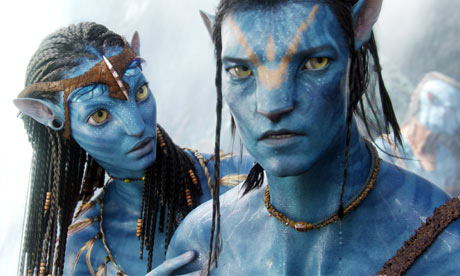
Avatar
Box office blues … 3D exploded into our cinemas with Avatar in 2009, but now the novelty appears to be wearing off. Photograph: Rex Features
Audiences for films in 3D are projected to decline in 2013, the first drop since 3D exploded with Avatar in 2009, according to a report compiled by Fitch Ratings.
Since the success of James Cameron's sci-fi epic, more and more movies have jumped on the latest iteration of the 3D format, which is no longer confined to animation or big-budget action films. The likes of Baz Luhrmann's The Great Gatsby and Alfonso Cuarón's Gravity will also exploit the new technology.
However, Fitch has concluded the novelty is starting to wear off. 3D box office takings in the US and Canada have remained static at $1.8bn for the past two years, and are set for a slight year-on-year decline in 2013 despite a strong lineup of 3D releases, including Star Trek Into Darkness, Iron Man 3 and Man of Steel.
"Attendance likely benefited from the initial proliferation of 3D films," says the report. "However, the initial excitement has dwindled, and consumers are focused again on the overall quality of the film and are weighing the cost of a premium ticket versus a base 2D ticket."
While overall box office takings increased in 2012 to a record-breaking $34.7bn worldwide, 3D failed to make a similar impact. "Going to the movies remains one of the lower-cost forms of entertainment," says Fitch's study. "However, increased pricing, particularly on 3D films, may erode this perception over time."

Saturday, April 13, 2013

2011 UK Cinema report: key facts

Each year the BFI (British Film Institute, who have taken over duties from the UKFC) publishes a report on the UK film industry, highlighting trends and changes: the share of UK productions v US-backed UK productions v Hollywood imports; the share for Indies; the box office % for 3D; the rise of digital production etc, and more.

Below, I pick out the key points and include analysis (+ further links/quotes) to help you include this in your exam prep. There's a full list of definitions at the very end, but this one is especially useful: A UK film is a film that has been certified as British by the DCMS or by the Certification Unit of the BFI (acting on the authority of the Secretary of State for Culture, Olympics Media and Sport) or which is a de facto UK film by virtue of being made in whole or part in the UK by a UK production company. You can see from this that the definition of a British film, as far as the government is concerned, includes basically US films which are partially shot in the UK. Both Warp and WT are treated as British companies, despite WT being majority-owned (67%) by NBC-Universal
Here's some links to their latest reports:

Statistical Yearbook 11

The 2011 Statistical Yearbook offers the most comprehensive and accessible picture of film anywhere in the UK
New reports
Statistical Yearbook Archive
Our Publications A-Z contains a pdf archive of all of our Statistical Yearbooks to date:
------

SOME KEY POINTS FROM THE REPORT

The points/data below are taken from Film production in the UK - full year 2011 report (76KB, PDF), 31 January 2012 - I've also added some further analysis and links.
  • Admissions (the number of tickets sold) rose to 171.6m
  • the total box office from this was £1.4bn, up 5% from 2010, with Indie hits The King's Speech and The Inbetweeners Movie a key factor: both took over £45m  making them the biggest UK Indie hits ever
  • Harry Potter and the Deathly Hallows Part 2 became the 3rd biggest UK hit of all time with £73m after Avatar and Toy Story 3
  • there were 6 movies over £30m (compare that to the US where many of the top 10 in a typical week will have exceeded that), the above + Pir.Carbn: On Stranger Tides; The Hangover 2; The Twilight Saga: Breaking Dawn Part 1. Its unusual for big 6 flicks not to take the top spots!
  • the surprise £23m success of Bridesmaids showed the strength of female-centred movies [DB: prospects for a 3rd BJD movie look good right now]
  • WT's biggest UK hit was #12: the £20.6m (1 of 13 in UK to top £20m) Johnny English Reborn (its final total is higher still, as it overlaps with the 2011 figures), tho' parent company Universal also had #9 Bridesmaids and #14 Fast and Furious 5
  • WT also had #12 in 2010 with Nanny McPhee and the Big Bang (£16.53m) - this shows the importance of franchises to film producers and distributors; again, with BJD3 imminent this trend is not going away
  • over the past decade UK films account for 24% of UK box office, but 18% of this is US-financed productions; only 5.5% of UK box office came from UK Indies - that average was doubled to 13.5% in 2011
  • WT are classed as a UK Indie, which suggests that the genuine % for actual Indies is much, much lower! Tinker, Tailor, Soldier, Spy was the 3rd biggest 'UK Indie' hit of 2011. Warp X made it into this chart, #14 with the brilliant Submarine (£1.46m); Four Lions was 5th biggest Indie hit in 2010. Only 5 'UK Indie' releases earned over £5m in 2011, again showing why their releases rarely exceed £5m in budget
  • The Harry Potter sequel took 48% of its money from 3D screenings. There were nearly twice as many 3D films as in 2010, 3 times as many as 2009 ... BUT, perhaps the 3D bubble is finally bursting? In 2010 3D took 24% of UK box office, this was down to 20% in 2011. More and more '2D-to-3D conversions' (where software is used to reprocess films not shot in 3D into 3D) are being released, and perhaps the novelty is wearing off - maybe Avatar will prove the absolute peak of 3D? While you can still double ticket prices, though, 3D will remain a tempting proposition: right now a 3D conversion of The Phantom Menace is doing well worldwide, and Titanic is soon to be re-released as 3D as well. We've yet to see any WT 3D (and its far too expensive for Warp to consider). Cinemas have been desparate to compete with the growing trend of home cinema, expensive large-screen/surround-sound living room set-ups that many people now use in preference to cinema, with its (sorry, but its true!) noisy teens, over-priced tickets and horrid food:
Cinemas are obliged to split money from ticket sales with the film studios, but get to keep almost all the cash they make from selling food. That means that the "concessions" (popcorn, sweets and the like) make up 20% of a cinema's revenue but 40% of its profits. A box of popcorn is around 85% profit to the cinema, and salty foods of course encourage people to buy more soft drinks, increasing receipts further. "Without the hefty concession profits," declared an article in Time a few years ago, "there would be no movie theater business". (http://www.guardian.co.uk/lifeandstyle/wordofmouth/2012/mar/07/cinema-snacks-a-view-to-a-killing)
see also prev posts on 3D/digitisation:

  • Despite the apparent promise of digitisation to open up the film industry to low and micro-budget productions, with reduced distribution costs also helping, the number of films produced in the UK in 2011 actually fell from 322 (2010) to 237. In 2010 there were 184 UK films made for under £500k, in 2011 just half that at 98, again, not what we expect from the benefits of digitisation. Will the closure of the UKFC further damage the prospects of low-budget UK Indie releases in 2012? The total spend (all the budgets added up) actually increased slightly, to £1.26bn, though most of this was US money.  


The terms used by BFI:

A UK film is a film that has been certified as British by the DCMS or by the Certification Unit of the BFI (acting on the authority of the Secretary of State for Culture, Olympics Media and Sport) or which is a de facto UK film by virtue of being made in whole or part in the UK by a UK production company.
A US studio film is a film that is produced in whole or part by one of the major US studios or one of the major US studios’ specialist subsidiaries.
An independent film is a film made by an independent production company or group of independent production companies.
US studio films are generally distributed in most territories by the parent studio. Independent films are usually distributed by different distributors in different territories. 
[Source: The UK box office in 2011 (112KB, PDF), 31 January 2012]

Sunday, April 11, 2010

Kermode: 3D is Rubbish!

Excellent Film Guardian article by Mark Kermode, fellow quiff-bearer, on the economic importance of 3D to the film biz, but also on why he sees it as basically a con.
There's an interesting comment too by 'chewtoy':
Call me paranoid, but the new 3D offensive has a much more sinister side to it than merely fighting piracy and getting bums into cinema seats. Cinematic immersion is a concept straight out of Brave New World. It's the extreme opposite of the Brechtian distancing (a.k.a. alienation) effect. The audience is meant to lose itself passively and completely in the depicted action, being transformed from consciously critical observers to mindless consuming drones.
This touches on a key debate within Media Studies (and amongst practitioners too; whole movements, such as the French New Wave, have come about as a response to the perceived power of the media over the audience): whether an audience is essentially passive and meaning is controlled by texts' authors (eg the hypodermic syringe model), or active and in control of meaning (eg the uses and gratifications theory).
The article: