This blog explores US influence (financial + cultural), Anglocentric (ie, primarily English) representations, digitisation, ownership, industry developments, audience, media theories, tracking key news + events, with Film/Media A-Level/undergrad students + educators in mind. Examples often include Sheffield's Warp (Indie) and London/LA-based Working Title (NBC-Universal subsidiary), ie This is England/Four Lions v Bridget Jones/Green Zone! Please acknowledge the source/blog author: Mr D Burrowes
To mark the nationwide release of box office hit Tinker Tailor Soldier Spy,
Impact was commissioned by film distribution company Studio Canal to
create a guerrilla marketing campaign to support the movie launch and
boost online word-of-mouth. This took place in the week prior to the
movie’s release date on 16th September 2011.
The campaign saw Tom, Stephen, Paul and Dave from the Impact Promotions team
disguised as 1970′s spies, surreptitiously disseminating leaked
dossiers on tube carriages, public benches, window sills, pub tables and
other unexpected locations around town.
Our Secret Agents targeted London’s main transport hubs and railway stations, mingling with commuters and tourists at departure boards inside Liverpool Street,Waterloo and Charing Cross stations.
Following client brief, the team focused their efforts on mature and affluent ABC1 audiences,
especially commuters and city professionals. All demographic groups
targeted responded very positively to the promotion, seeming genuinely
intrigued by the leaked dossiers and elaborate spy costumes. In their
role as spies, the team actively engaged with the public, asking questions such as: ‘Did you drop this?’ and ‘What is the code word?’ or ‘Have you seen the Mole?’. The campaign was linked to an online Facebook competition which allowed users to post photos of the found secret dossiers on the movie’s fan page for a chance to win film memorabilia. The activity contributed to generate 7000 subscribers within its first week of opening, with dozens of positive comments and candid photos of the leaked dossiers at various locations in London.
I'm copying these straight in: there's much more over at http://petesmediablog.blogspot.co.uk/ (thats a blog run by ther Chief Examiner of our exam board, OCR - its very helpful)
Whichever media area you are covering for this question, it is important
that you show understanding of the key concepts and refer to specific
examples in your answer. In this post, we will consider some of the ways
in which you can help yourself do well with five 'top tips'.
1. Read the question carefully
You have no choice of questions, so you have to have a go at what is
there on the paper; sometimes students panic and think that they don't
understand the question- maybe because of one particular word- but so
long as you have prepared on all the concepts there will be something in
the question that you recognise. Words like 'technology',
'convergence', 'distribution', 'marketing', 'digital' come up and you
should see them as your 'hook' into the question. Even if the overall
wording seems to be baffling, look for the terms that are there in the
question and see them as the springboard for your answer.
2. Don't spend ages on an introduction
You only have 45 minutes to answer the question, so there isn't time to
waffle! A quick sentence which sets out what you are going to do and
which media area or industry you are going to use will suffice. You can
prepare a lot of this in your head in advance, so something like: In
this essay, I shall write about (concept) in relation to the (film,
music, radio, etc) industry, drawing on (examples) as my case studies.
3. Know your examples
Whichever industry you are writing about, you will need examples to
support your points. I would always advocate having some contrasting
examples so that you can look at all angles; for example, you might have
a mainstream high budget film from the USA to contrast with a low
budget independent Uk film, or a major record label to contrast with a
little UK indie label. That way, you can talk about the different ways
in which the industry might operate in different circumstances. You need
not know absolutely eveything about just two examples, however. It
could be that you know about the funding of a particular low budget
film, but don't know about its marketing; in which case find another
example of something similar where you can find out about its marketing.
The important thing is to get a good grasp of the ways in which the
concepts apply rather than every tiny detail of a specific case study
example. What you do need is to make sure you understand the general
principles well and can back up your points accurately.
4. Try to be systematic
Don't jump about between points; spend a bit of time at the start of the
exam planning the structure of your answer and working out the main
points and examples for each paragraph. this will ensure that the rest
of your time is spent fruitfully as well. Know what key point you will
make in each paragraph, what examples you will refer to and how you want
to make a case from it all. Use similarity and difference as starting
points for organising an argument; there will be differences between
mainstream and indie which you might use as your way through, for
example.
5. Make it all legible
Remember, examiners may be old and may have poor eyesight. Well at least
that applies to me! Most students do not have great handwriting, so
make it easier for the examiner to find the strengths in what you have
written. Keep your paragraphs relatively short- half a page at most.
Leave a clear line between each paragraph. There is nothing in the rules
to say that you can't use a highlighter pen to emphasise your key
examples or terms. Don't overdo this, but it does sometimes help to draw
the reader's attention to points which ought to pick you up marks.
Prepare well and you should do well. Answers to Q.2 often look shorter
than those for Q.1, but if you know your stuff and have revised
properly, they shouldn't be. Good luck!
With just three weeks to go to the exam, here are a few tips for the OCR AS G322.
1. Practice a bit of writing on TV Drama and particularly in organising
your notes. You'll find a whole presentation of tips on that part of the
exam in my presentation from an earlier post on Feb 29. There I suggest
that you go into the exam knowing how you will organise your notes, so
that you have a structure to look out for things and to ensure that you
maximise the note-taking time. After the first screening, if you draw a
grid in the answer booklet, like this:
It will give you all you need for the four categories- mise-en-scene,
camerawork, editing (continuity editing, at least) and sound. Down the
side are the three categories P- point, D-data (or example) and Q-
question (how to relate point and example to the question set). This
model was suggested by Vicky Allen at Thomas Rotherham College, who gets
good results every year, so she should know!
When revising for the exam, fill out a grid like this with the points
you are going to be looking for on the day, then regardless of the
extract, you will have things to look for. You won't be able to take one
in to the actual exam, but you will have fewer things to memorise to
cover!
So, under mise-en-scene, you might be looking for key examples of
setting, costume, props, colours, makeup, hairstyle, lighting, posture,
gesture. For camerawork you want to make points about angles, shot
distances, camera movements, framing and focus. For continuity editing
you want examples of the 180 degree rule, match on action, shot reverse
shot, eyeline match, insert shots. For sound you will want examples of
music, dialogue, sound effects, use of foley, counterpoint, sound
bridges. If you have lists like this that you can then remember, that
gives you plenty to look for.
Once you have watched the extract through, during the second screening
you can very quickly note down your grid and start to put in examples
to support your points and then as you watch it a third and fourth
time, you can start to relate the examples you find back to the
question, by asking what they contribute to the representation under
scrutiny. So, for instance, how is the setting being used, how are
camera angles being used, how are features of continuity editing used to
help establish differences between characters. You'll have 30 minutes
in total for the note-taking, so make the most of it!
Remember, the more you do in preparation for the note-taking, the better
your chances in the essay itself. A well-organised answer in the 45
minutes for writing, supporting points with examples, will go a long way
towards getting you a good mark!
The RC rom-coms contribute nearly $2bn of the $5bn (nearer $6bn by now) all-time total, BUT the last major RC hit was back in 2004 with the BJD sequel Edge of Reason. Just as with the horror movies we looked at, it seems even WT may be somewhat reliant on franchises too: a 2nd sequel is due out soon. The horrid TBTRocks was a flop, increasing the attractiveness of a return to a proven winner.
You can use this to aid your revision: IMDB, Wiki + other sites for most of the Warp Films/X releases, + distributor Optimum/StudioCanal UK + more
Links descriptions also contain a lot of info: you can learn a lot from these even without clicking into the sites!!!
At http://www.redberrydigital.com/projects you'll see a lot of familiar names: this is the company that designs and produces WTs multmedia website, including the individual sites.
Today, I'd like each of you to pick out ONE WT film listed by Redberry, take notes on what they say (especially any notes on audience!) and then visit the film's site and take notes on what promotional features you find there
Across the Media A-Level, so at both AS and A2, the ever-growing issue of digital media, and what impact the digitisation of media is having on the industry (and culture more generally), is a central issue. When we look at British Cinema in AS, for example, this raises issues around how films are produced, distributed, exhibited ... and consumed. So, Warp X is set up explicitly to foster the development of digital film-making (PRODUCTION) in the UK, which in general terms creates the prospect of more low-to-zero budget filmmakers entering the fray. Even comparatively high budget films, such as WT's Atonement, are being produced using digital film-making techniques. A quick look on Apple's web pages for Final Cutshows you just how many major productions, not just Indie efforts, are switching to digital film-making, and editing through software which once would have been a step down from industry level. Distribution of movies becomes potentially much cheaper, as film prints (costing millions for any hit movie) become obsolete; a portable hard drive can be used instead - the problem being the lack of digital projectors in cinemas as of 2009! See LaunchingFilms.com. The wiki on this notes:
Digital distribution of movies has the potential to save money for film distributors. A single film print can cost around US$1200[citation needed] (or $30,000 for a 1-time print of an 80-minute feature[8]), so making 4,000 prints for a wide-release movie might cost $5 million. In contrast, at the maximum 250 megabit-per-second data rate (as defined by DCI for digital cinema), a typical feature-length movie could fit comfortably on an off the shelf 300 GB hard drive—which sell for as little as $40 (retail price, volume prices are even lower) and can even be returned to the distributor for reuse after a movie's run. With several hundred movies distributed every year, industry savings could potentially reach $1 billion or more.
What this doesn't say, however, is that marketing costs remain, and without the clout and financial muscle of the big 6 especially, able to secure expensive advertising and favourable puff-pieces in the press and on TV in return for some access to their stars, Indie distributors continue to be at a huge disadvantage. Cinema chains are also discouraged from looking much further than the big 6, as EasyJet's Stelios found. Viral marketing is a possibility here of course...
Bringing us to the use of the web for exhibition, and consumption. This is potentially a great leveller; if the terrestrial TV channels are closed off, why not try the likes of Propellor TV? Or a MySpace page? Or YouTube? Or just straight-to-DVD using some of these as marketing platforms? Although we talk about you always thinking of yourselves as hypothetical film-makers, operating in the real media industry,for the purposes of your blogs and the marking of these, in effect you already are! The Co-Op Festival, for example, wasn't a mirage! Many of you have posted your work on Facebook, YouTube and other social networking sites, and we've even seen copies of Twis'hite changing hands for actual money!. For the big boys, though, this brave new world of cheap production, distribution and exhibition isn't viewed so brightly...they continue to dominate largely through this rather crass tentpole strategy; churning out high-budget spectacle movies which prioritise SFX over narrative, the recent Terminator Salvation and Transformers films being 'good' examples of these appalling character traits! It remains to be seen whether the much-hyped upcoming James Cameron project, Avatar, is more like Terminator 2 (technology married to a great narrative and convincing performances) or the 3rd and 4th installments of the franchise - which is now up for sale, if you have a few million burning a hole! Any democratisation of the film industry is straightforwardly a nightmare vision for them. Colin, the £45-budget (not a typo!) Brit-zombie flick (maybe you'll see a similar story about a Mr E. Clark before too long?!), is everything they fear. Blurring the lines between audience/consumers and producers is an exciting prospect (strike that; its a reality - look at the various YouTube re-workings of any hit movie; we've looked at Bridget Jones spoofed as a political thriller for instance), but not one that necessarily ensures the ongoing domination of these lumbering great conglomerate giants.
Can they even get us to pay?! BitTorrent and similar file-sharing technologies are used by most of your generation to some extent, leading folk your age to grow up with the at least partial expectation that you can access media for free. The big boys are trying to fight back through iTunes, and more specialist ventures such as Hulu, but could well be going the same way as the music business, which has seen profits plummet since Napster brought the prospect of free music to the world. The court case against The Pirate Bay, a BitTorrent search engine, seems to be an indication that the industry is determined to use the courts to combat online piracy, despite many commentators viewing this as pointless, futile and possibly even counter-productive. New laws have been proposed by the current government following high-profile lobbying by the film biz. You can see a range of articles on this here.
The reason I wrote this was simply being recommended watching a lecture... Exciting stuff I know, but you would benefit hugely from watching the lecture, described as follows:
Anthony Lilley, recently appointed by The Centre for Excellence in Media Practice as a Visiting Professor, delivers his inaugural lecture: Paying Attention: the changing value of media in the Internet age.
I haven't had time, yet, to watch, so perhaps you could comment with some observations based on your own viewing of it, and what can be learned from it!!!
-----------------------------------------------------
ADDITION, DECEMBER 6TH:
Empire magazine critic Angie Errigo makes an interesting defence of the state of modern movie-making against claims that its filled with mega-budget tat that ignores narrative in favour of sheer spectacle (Inside Empire (2009) "They do make 'em like they used to", pp. 18-19).
A voice and a vision, and a reluctance to do what is expected are what's wanted in aspiring filmmakers. A-list stars and million-dollar explosions are completely optional if there's a story to be told, an emotion to be felt, a mood to be captured. Far from being a downbeat era of pap, these are wildly exciting times for all of us, rich with possibilities. Having entered the digital age with web access for all and an array of technology that gets cheaper by the minute, it's more possible than ever for movie brats to make their own productions and make them more ambitious and sophisticated than the Super 8 kids managed in their backyards. For every Hollywood film that costs upwards of $150 million, thousands of 'home movies' can be made and hundreds that are good to go in cinemas. It isn't naive to believe that 'talent will out'. The next Shane Meadows, Steve McQueen and Duncan Jones are out there at work within and without 'the System'.
Super 8 is an old-fashioned format of video camera. If you've ever seen Son of Rambow imagine you were making your coursework with the same technology, a VHS video camera and two VHS machines linked up for editing (no digital technology at all, no computers even!).
------------------------------------------------------
ADDITION 8.3.2010
A lecture from UKFC on digitisation in film
v
The article this is taken from contains strong language; cult TV writer Karl Sutter writes, in a piece in which he bemoans the fate of his own movie project being stuck in development hell:
The world is in a media/content upheaval. Digital has changed the game. Everyone is grasping at what they thing might be the next big thing (that handful of WTF was the major reason for the WGA and SAG strike). But the truth is no one f*****g knows. TV, internet, movies -- it changes every day. The good news is that no matter what it looks like, how, when or where they get it, people want entertainment. So there will always be a need for content -- writers, directors, actors. [asterisks added by DB]
Working Title films was founded in 1984 by Sarah Radclyffe (Who would later leave the company to be replaced by Eric Fellner in 1992) and Tim Bevan. The company’s first notable success was the 1985 film My Beautiful Laundrette, a story of a young Asian man’s battle to ‘make it’ in London during the Thatcher years. The film stars Saeed Jaffrey and features a breakthrough performance by Daniel Day Lewis and was both a critical and commercial success for the fledgling studio, picking up two BAFTA nominations, and an academy award nomination for best screenplay. The success of My Beautiful Laundrette enabled Working Title to establish themselves as a serious production company and attract the attention of backers Polygram in 1992, and also the attention of the major American studios who were interested in distributing Working Title’s projects internationally.
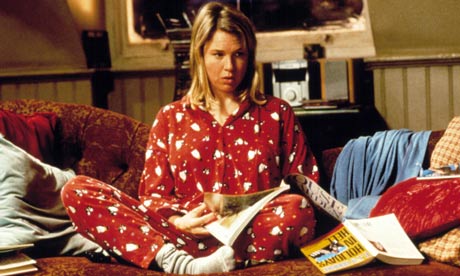
Big star ... Renee Zellweger in Bridget Jones's Diary – a third film could be on the way with a more slimline Bridget. Photograph: Everett Collection/Rex Features
A third Bridget Jones film is on the way to cinemas after producers promised Renée Zellweger she would not have to pile on the pounds to play the hapless singleton, reports the Sun.
The website www.launchingfilms.com - run by the Film Distributors' Association - contains useful info on the process of film distribution in the UK (the stage after production, involving marketing and negotiating with exhibitors to gain theatrical (and, later, DVD, pay-TV, premium channels and free-to-air screening) release. They publish a pdf guide on this.
This doc briefly summarises some key points on distribution.
Some key points:
look closely at the issue of distribution; the doc above gives a brief summary of this, with links for further reading; I'll add to this if I get time (distribution co's pay a flat fee and/or a % of potential profits for the rights to sell a production co's film to exhibitors - cinema, TV, DVD etc. Distributors pay for the marketing of a film, not the production co - tho' WT are unusual as they insist in being involved in the marketing campaign - use BJDiary as a case study, but also ref Love Actually)
do focus your answer on the case study of WT, but put this into context with reference to Warp Film/X as a more typical Brit production co (working on much smaller budgets than even WT's 'Indie' arm, WT2; social realist films; genre films 'with a twist'; working with Optimum Releasing and Film4/C4 for distribution; tho WT was sim to Warp when it started out) AND some specific comparison too to a Hollywood producer (use Universal, obviously part of the NBC-Universal conglomerate)
how do these sometimes giant corporations go about targeting an audience? Marketing is key to this (BJD cleverly taps into a wide aud thru its soundtrack etc), but so is the use of stars (Richard Dyer's star system), setting/accent (focus on white, S.Eng, m-class?), and the trend of hybrid genres (rom-COMs reach out to males thru comedy aspect; LActually makes this explicit with its 'ironic' sexist music vid with Bill Nighy, a parody of Robert Palmer's 1980s 'Addicted to Love' music video. For a company like Warp X, use of stars generally won't be an option; they focus on working within familiar genres - eg the slasher Donkey Punch taps into the wide fanbase of horror/slasher movies, featuring a 'final girl' - a tough, resourceful female character who overcomes the typically male killer - to reach out to a female audience for this primarily male genre
British and Indie production companies will typically begin initial development then try to sign advance distribution deals that will in effect finance the production. WT used this strategy very successfully to build the company in its earliest days, before the tie-ups with first PolyGram then NBC-Universal. Slumdog Millionaire failed to win any financial backing in the US initially, British companies Celador and FilmFour stumping up most of the initial development funding, but did manage to get the last $5m of its budget by pre-selling distribution rights to to Warner (having rejected a $2m bid from Fox Searchlight - see wiki)
this route to funding a production is becoming more difficult, with distributors increasingly reluctant - or simply unable - to make payments in advance of production being completed (see Gdn article)
In looking at 'British' Cinema several issues come to mind:
the overwhelming dominance of Hollywood and the 'big 6' conglomerates in particular. How many British (or filmmakers from any other nation) companies can compete with the 2008 $185m budget spectacle movie Dark Knight, an example of the 'tentpole strategy' of a small number of mega-budget releases underpinning the big 6's release strategies (which hoovered up $533m in the US alone, getting a brief 2009 re-release to take it over $1bn worldwide? (WT are increasingly coming close to the $100m mark, but this is only possible as a subsidiary of NBC-Universal - e.g., the 2004 smash BJones: The Edge of Reason cost $70m)
the ongoing dominance of the social realist genre - at least partially a reflection of British filmmakers inability to attract funding for UK-set action/fantasy/sci-fi films (Harry Potter and Bond franchises excepted), but also the popularity of such films in Europe, where our few auteurs (Ken Loach, Mike Leigh especially) generally look to for funding. The British social realist tradition, growing out of the 1920s-40s British Documentary Movement, was a key influence on the French New Wave and Italian Neo-Realism movements of the 50s and 60s - both themselves a reflection of pragmatism in the face of limited availability for funding.
there are occasional exceptions to the rule that US audiences have no interest in social realist films (WT2's Billy Elliot; The Full Monty; Mike Leigh's Secrets and Lies; arguably Danny Boyle's Slumdog Millionaires), social realist films' whose underdog protagonists triumphing against the odds neatly reflects the 'American Dream' ideologythat any and all US citizens can be winners in their extremely uneven society. Interestingly, Shane Meadows' £1.5m 2006 Warp Films drama This Is England was seen as an arthouse movie in the US, where it took just $300,000 in 4 months, averaging a mere ten screens a week! There was a niche ABC1 audience for the film, but it had no prospects of wider commercial success
if we look at the fortunes of Hammer, there is a degree of irony here: Hammer briefly lead the world in the horror genre, establishing the likes of Christopher Lee as global icons in the process - but found their slightly camp, theatrical and gothic productions were left looking out-moded alongside low budgetIndie productions from the US, such as Wes Craven's $90,000 (that's not a typo!) 1972 proto-slasher The Last House on the Left (ironically, banned in the UK until after the 1999 retirement of long-time BBFC head James Ferman). Craven, and his many subsequent imitators, took a leaf out of the social realist handbook, making films on a shoestring with that distinctive documentary feel (shaky camera work, kinetic cinematography [lots of cam movement instead of static set-ups], low-key, naturalistic lighting etc) that gave a heightened sense of realism.
WT began as a low-budget Indie producer of social realist films: 1985's My Beautiful Laundrette (with its challenging themes of class, race and homosexuality added to its counter-hegemonic critique of Thatcherism wedded to the company's belief in introducing new talent: Daniel Day-Lewis), a TV movie that won a cinema distribution deal after doing well at The Edinburgh International Film Festival, and1987's Wish You Were Here which made a star out of Emily Lloyd and her 'up yer bum' catchphrase!
Warp Films is comparable to WT in its early days, an Indie producing generally social realist films on low budgets (like the early WT, it has links with C4/Film4). Warp X is more comparable to WT2, though, aiming to produce genre films "with a twist" (WT2's motto: "Humour, Horror, Heart")
its clear that following the (hybrid) genre path is the way to make serious money: if the US market is usually disinterested in British social realist dramas, often with an overt focus on social class (most Americans, rich and poor, have the self-perception of being middle-class), wouldn't any sensible business follow the WT path of churning out sickly rom-coms with their A-list American star to help tap into the lucrative US market? Look at the figures (using Guardian or IMDB): the $150m budget (Paramount, big 6!) Star Trek film took $75m from just under 4000 screens in its opening weekend stateside; almost £6m from 499 screens on its UK opening weekend. The US has 5 times the UK population and is wealthier to boot; UK filmmakers who don't attempt to build in cross-over appeal to the US market are limiting their potential profit.
...however, is the bottom line all that matters in the film industry? Isn't it one of the much-mooted cultural industries [aka the knowledge economy; cf. Will Hutton] that underpin the UK's post-industrial economic future? Consider the mission statement of the UK Film Council, the quango funded by direct government money as well as Lottery funds, which in turn finances regional arms (eg Screen Yorkshire & EM Media, co-financiers of TisEng): "The UK Film Council is the Government backed lead agency for film in the UK ensuring that the economic, cultural and educational aspects of film are effectively represented at home and abroad." [emphasis added]
so, lets ask another question: which is the more important film: Indie Warp Film's (co-produced with UKFilmCncl, EM Media, ScrnYorks, Film4, Big Arty Productions and distributor Optimum Releasing) This is England (£1.5m budget, no stars, modest UK box office of £1.3m) or big 6 conglomerate subsidiary WT's $70m rom-com sequel (co-produced with Miramax, Universal, Little Bird, Studio Canal and Atlantic Televsion) Bridget Jones: The Edge of Reason (took £35m in UK, and a disappointing $40m in US - BJD took $72m)?
we could also ask whether either of the BJones films are actually 'British' films, considering the importance of funding from the European Studio-Canal - itself, like WT, now a mere subsidiary of NBC-Universal - and American big 6 member Universal
which do you think speaks to you most about YOUR identity (there's no correct answer here - I'm asking you to reflect a little on your personal consumption of films)?
you could argue that TiE's focus on class and race is itself a little cliched by now, although the key argument here would appear to be over the extremely narrow, stereotypical depiction of Britishness seen in both BJones films: white, middle-class, southern English characters, and various shots of Britain as quaint, rural - and even akin to a Quality Street ad when it comes to representing the teeming metropolis that is London. The BJones films rely heavily on their use of an American star, and the use of stereotypical representations of Britain that will be familiar and thus comfortable for an American audience - who would surely feel bewildered and alienated by the council estate mise-en-scene we see throughout TiE, and the broad northern accents its characters employ.
Indeed, BJD only became a hit in the US after Miramax supremo Harvey Weinstein noted the US test audience, confused at early mentions of Xmas turkey curry, broke into laughter at the visual humour of Colin Firth's reindeer jumper - a scene notably used in both trailers and music videos for the film's marketing. Without this, it may not have got funding for US distribution and marketing. [I'll blog separately about 'Curtisland'...]
'Channel 4 is one of several bidders – also believed to include Channel Five owner RTL, Time Warner, BSkyB and NBC Universal – for Virgin Media's seven pay-TV channels, which include Living TV and Virgin1.' - http://www.guardian.co.uk/media/2009/may/29/virgin-media-channel-4 The big 6's grip on our culture could soon be tightened further it seems
You will hopefully have noted an incongruity in discussing 'British' cinema and representation of Britishness here: we're looking at two films set in England...
If Hollywood's dominance of our screens, large and small, can be said to constitute cultural imperialism, with even our foremost film production company (WT) prioritising satisfying a potential US audience over its domestic market, and churning out work even within its low-budget, Indie wing (WT2) that focusses on familiar genres (as does Warp X to a lesser degree), what about the internal UK position? As northern English viewers, do you think the British film industry represents yourselves satisfactorily; do you, at the basic level, see sufficient reflections of yourselves on screen? Does the dominance of S.Eng representations bother you?
The position is even more stark if we look at this from a Celtic perspective: there have been some breakthrough Scottish-set hits (Trainspotting), but not for some time; can you name ANY Welsh-set films (consider how Rhys Ifans' character portrays the Welsh, as a binary opposite of the suave HGrant, in NHill); and for the N.Irish, we only seem to see ourselves represented endlessly as violent, drunken terrorists/psychopaths (even the controversial Hidden Agenda [rem Chomsky's propoganda model: flak as 1 of 5 filters], with the main cast being entirely American, Scottish and English, saw an English policeman emerge as the hero, with Ken Loach deploying some crude stereotypes along the way)
So... if it makes commercial sense to target a US audience through a S.Eng setting, and a narrow focus on white, middle-class characters (using a US star if funds allow - around half of the $42m budget for Notting Hill went on A-lister Julia Roberts' salary! - contrast this to Donkey Punch's £1m budget being mainly taken up by hiring the boat its set on!), with a narrative framed in a genre familiar to a US aud, and we can consider this cultural imperialism ... then does the same apply within the UK?
Look at the contrasting fortunes of Son of Rambow (Garth Jennings, 2007), a £4m Indie production that made its money back at the UK box office on 300 screens a week, adding another $1.8m in the US (you can add DVD and TV sales to these figures), and WT2's $5m Mickybo & Me (Terry Loane, 2004), which was released for just one week in N.Ireland on 28 screens, taking just £172,000 and failing to gain funding for a UK-wide or even US distribution. Both have comparable narratives centred on two young boys with obsessions about a specific film, but while the former is set in S.Eng, the latter is set in N.I. and inevitably brings in 'the Troubles', with our two leads eventually engaging in a near-fatal knife fight (because the tribal Irish can't do anything else but fight, as Ken Loach pointed out with Hidden Agenda!)
So, British cinema is in thrall to two commercial factors: cross-marketing potential to a US audience will greatly increase potential profits, which generally means a S.Eng setting/characters; but even within the UK setting the action anywhere outside the South risks poor returns also, as even the domestic 'British audience' can be reluctant to take on characters with Scottish, Welsh, N.Irish or Northern English accents (and even 'the South' is narrowly conceived: the likes of Bristolian accents aren't part of this concept, with the Midlands also somewhat excluded)
perhaps then we should applaud the existence of the UK Film Council, its regional arms, and Channel 4 (its production arm with a measly £10m budget is under serious threat though), all of which make films like TiE, which don't compromise for commercial ends, possible
although if we simply condemn a film like the BJD (chick-)flicks as candyfloss, we step into new arguments about the notion of high culture v popular culture, and the demonisation of any cultural form primarily consumed by females (rom-coms, soaps, celeb mags etc)...